

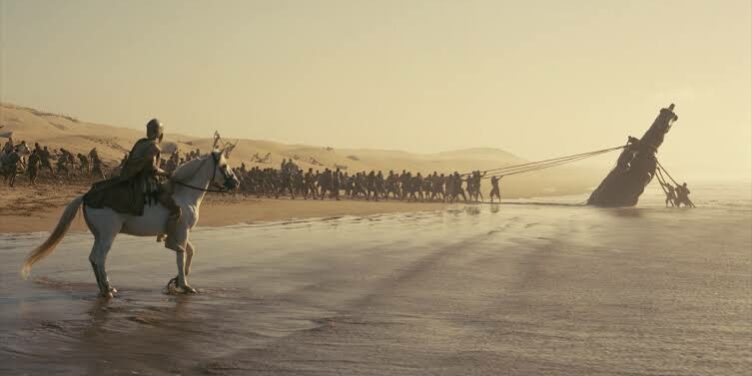
Christopher Nolan’s The Odyssey is one of the most discussed films of the year, not only for its adaptation of Homer’s epic poem, but also for its unusual visual choices, costume design and approach to female characters. As a costume designer and photographer, I wanted to analyse what in my opinion works, what doesn’t, and why.
The time has come to talk about what everyone is talking these days: Nolan’s Odyssey.
Sometimes I need to do some posts about more popular content, to draw extra traffic. Some time ago I used to write these things on my private facebook, but they do require time and thinking, and it is time and thinking that can have a purpose for my job, to share how my eye and creative mind work. So let’s go.
First of all: did I like it? Yes.
That said, what interests me most are the things that do not work, and understanding why is an exercise that helps build a critical view. I am trying to be more positive towards the world and myself, so in time I may be able to add more uplifting elements in my articles. However, if I wait to be ready, I’ll never start. So let’s start.
Will this article talk only about the costumes? No. It will include my opinions on other elements too.
Can I read this before seeing the movie? If you don’t fear spoilers.
Also, if you want to know more specific things about the original material and the movie, click in these links.
Christopher Nolan’s The Odyssey: adaptation choices and meaning
This is an adaptation, not a documentary. And despite the opening titles stating that it is directly adapted from the poem, rather than merely inspired by it, well…. It is not a faithful adaptation. And I have no issues with that.
Christopher Nolan’s The Odyssey has a precise purpose, and it’s not just to say “war= bad”, as some try to reduce the concept to. It is similar to Oppenheimer’s message, as some said. Though this time Nolan dug deeper. He has constructed a specific narrative around the purpose and has sculpted his character around it, instead of adapting the message to the story. The starting point is not the Odyssey, but the familiar theme to western cultures is used to communicate a specific and more complex message.
Christopher Nolan’s The Odyssey is made to raise awareness in the average western, white, middle-aged, cisgender man about the effects of Western capitalism on the rest of the world, and especially how not just war, but the infringement of international order and diplomacy and globalization risk to affect us all. Basically, he tries to build a world where that specific member of the audience can feel at home, a main character he will be willingly identified with, in comfort, to then make him face his own responsibilities in the everyday world. And to achieve this goal, you can’t build a main character that is too far from the average white man. For example Oppenheimer was portrayed as cold and distant, so this identification was only possible to a small degree. You can’t build a loner, if you want the average western man to feel like the story is about him. You cannot even do justice to Odysseus’ enormous sense of self, his humour and his hubris. You have to strip those aspects away and exchange black curls and tanned skin for a superhero with a golden-retriever soul, the American jawline and, possibly, the JFK nose of Matt Damon.
This idea is also supported by the choice of only using mostly known faces in the cast, while leaving the trojan enemy almost faceless. Continuous nods to how breaking hospitality towards strangers will make civilizations decline and the choice of casting Jon Bernthal as Menelaeus… everything points to this very deliberate storytelling choice.
If you don’t get that this is the whole purpose of the movie, all the other choices will be very hard to understand.
Christopher Nolan’s The Odyssey: adaptation choices and meaning
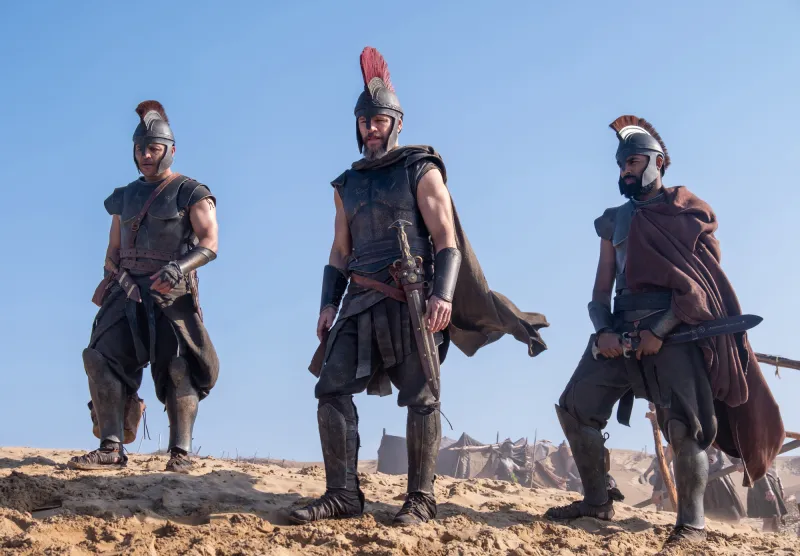
Why is everything greige?
I am not a director. But I am a photographer. And the beauty of the photography in this movie is undeniable. Especially considering that Nolan had to face the same issue every photographer knows all too well: having a full camera size picture to be cropped for instagram. Everyone with a camera has been there, even if none of us uses an IMAX camera. We feel you.
One of the biggest critiques of Christopher Nolan’s The Odyssey’s visual style I have seen is about the color toning: everything is grey and beige, while the Bronze Age was, in reality, incredibly colourful. With the concept of the movie it all makes sense: had the film embraced historically accurate colours and silhouettes, many viewers would probably have perceived them as strange or unrealistic, and identification would have had one more obstacle.
Moreover, if it had brighter colors, it would have felt less “serious”. Nolan clearly does not want scenes of slaughter to resemble photographs from a holiday catalogue. Do I like it? No. But I didn’t even expect anything different! He makes “intellectual” movies. He wants everything to be taken seriously, to the point that there is not a single joyful laughter in The Odyssey.
Do I wish they had found a way to portray something with a little more poetry to it? Of course.
Did my heart cry when I saw beige over greige over beige? I was deeply hurt. I still always hope Del Toro would give a bit of his migraine-worthy fairytale saturation to Nolan (I LOVE Del Toro’s colors, but he has so much he could loan them to other directors and still have more than enough).
So yes, everything is dull. Color-wise. But I can understand why. I wish they did otherwise, but I understand why my retinas have to drink from other sources. Like the horse sculpture. That was so utterly beautiful. In the sand. And the palaces. And the hanging cheese in Polyphemus’s cave. And Penelope’s jewels, most of which looked like they came from a museum. There was plenty of food for the eyes.
The Odyssey costume design: Nolan’s modern operatic aesthetic
Sometimes creators become so invested in layering meanings and symbolism…that the result ceases to be immediately readable to the audience.
I don’t mean that everything needs to be completely understandable by everyone, that would border on pedestrian. But things need to be perceived by most, at some level.
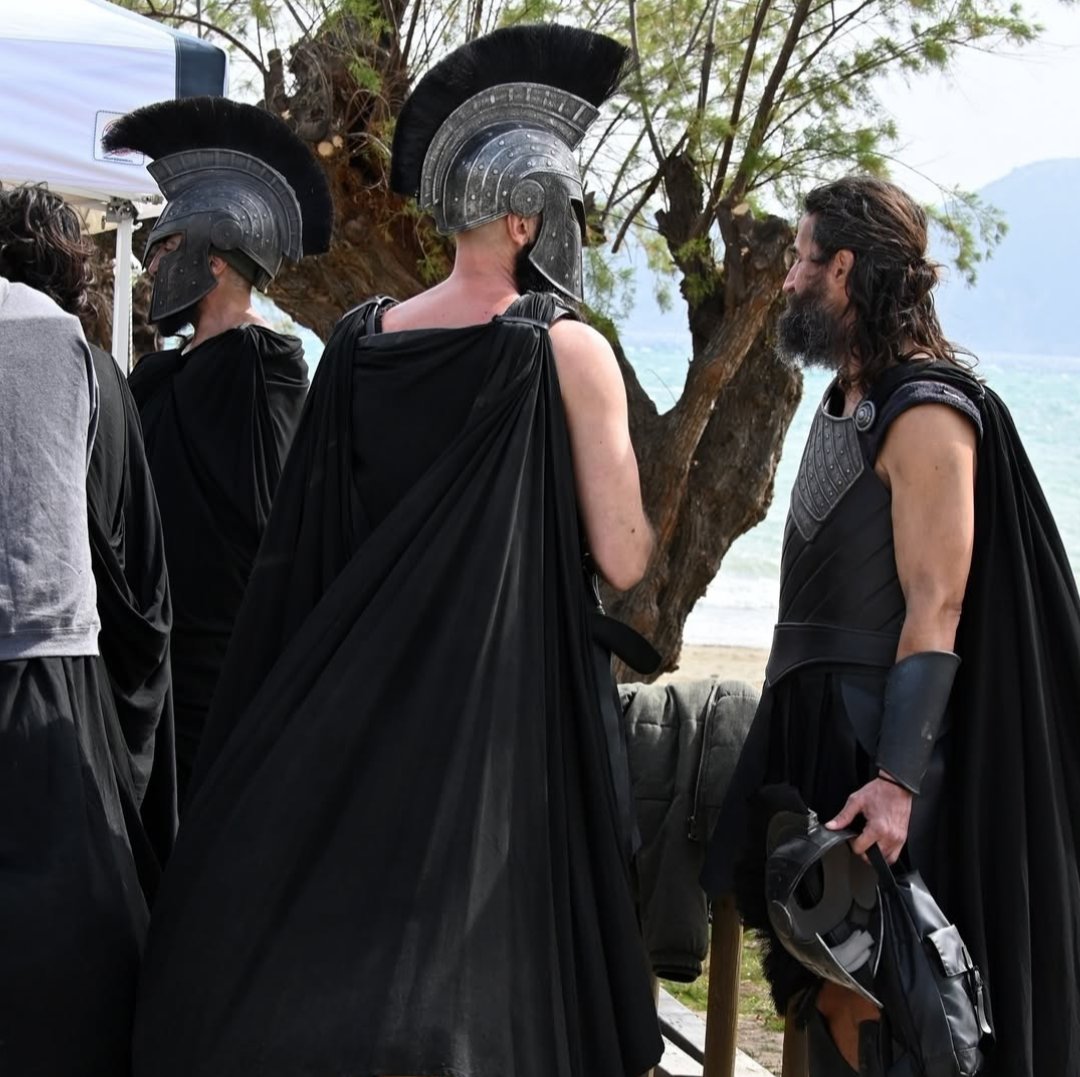
For example, I can understand the reasoning behind the modern operatic white costumes of trojan soldiers. They need to stand against the darker greek ones. And they also need to be faceless and all the same, as a metaphor of the depersonalization of the foreign enemy. That is very effective, you feel it, even if you don’t understand it. The trojan helmets reminded me a little of the meeples in Jumanji, but that may simply be my nerd brain talking.
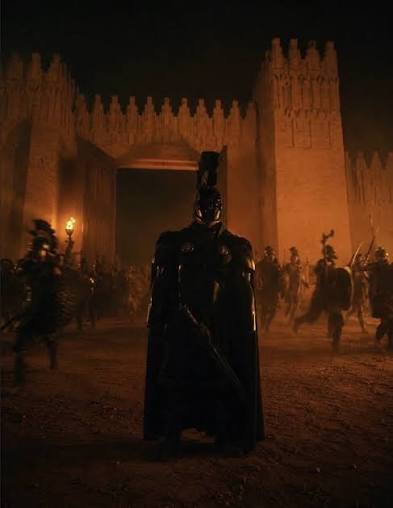
Another thing is Agamemnon’s armor. The Sandman-Batman-Darth Vader- giant cheekboned beetle one. That does feel different. But even with my level of intricacy in the reading, I couldn’t fathom why. It was the same style of the Laestrygonians. If gods and supernatural creatures are given a deliberately almost science-fiction-inspired visual language, I am completely on board. If you create a visual language for the armies, and then make him completely separated and closer to other identities, that is where you lose me.
I should clarify that I deliberately avoided reading interviews and explanations before writing this review. Because if you can only “get it” after they’ve clearly explained to you… it’s not working.
Minimalism and modern things can work. We have all seen things where minimalism and fantasy can work. And I am all in for that “modern Opera” look. But it has to be readable, at least in an unconscious way.
And if you choose to mix things, like it was done in Christopher Nolan’s The Odyssey… you have to be very clear in what you wish to convey. Different languages need to have rules that can be perceived, like it was done so brilliantly in Game of Thrones or Handmaid’s Tale. Otherwise, it feels like finding slices of radish in your tropical fruit salad.
In this case, Agamemnon’s armor has nothing in common with his fellow soldiers. He stands out and is closer to things he has nothing to do with. The reason why is not reachable. I understand he was kept almost faceless to make you see every CEO and president under the helmet. But still…cheekboned beetle.
Best costumes in Christopher Nolan’s The Odyssey*
*SEO rules don’t like “in my opinion”. They like “the best”. But of course, all this article is my personal opinion. And I wanted the title to be “my favourite costumes”.
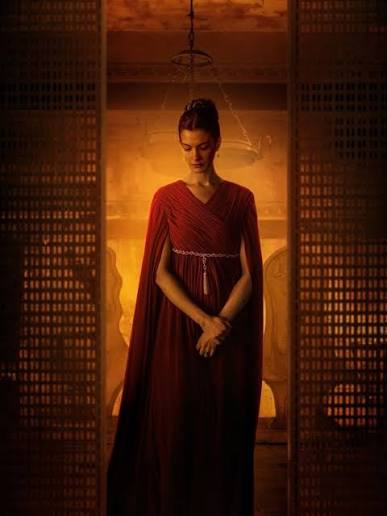
Penelope’s handmaidens. They were all lovely. Deep crimson shades, very minimalistic, yet effective.
I also loved Odysseus’s armor. It feels a bit not polished, gives the idea of the soldier, of the king of a small island of shepherds (despite his huge castle).
I also loved Athena’s robes. And, in general, when everything was kept simple and unpolished, it felt very strong.
Did I want to see super elaborate costumes to fall in love with? Yes. But I did not expect these things, since seeing the first images.
Costume choices that did not work for me
Agamemnon
See above. The last picture here on the side is a fun comparison between Agamemnon and the Senate Guards in Star Wars prequel trilogy, just for fun.
Odysseus’s helmet
I am not a fan of the super thin, gelatin-dipped crest. Especially when it stops at the hemisphere of the head and does not go lower behind. Feels a bit wrong with proportions. And tends to read more “roman”. But maybe that was a nod to fascism rising? If so, it was very hidden. But somewhat reachable. Barely.
Penelope’s last blue one with the collar
The dress merely serves as backdrop for the necklace. And I don’t like how the sleeves fall, their line and proportions do not work together with the dress, in my opinion.
Penelope’s pleated red
This one you can see very shortly, just before the final blue one. It is a pleated piece (moulage pleats), and though the idea was lovely, it kind of infuriates me. Because when it’s a small production, you can forgive a lot. If it has budget constraints and such, it’s fine. But if you are at the top, and you’re not a small business, and you have access to an incredibly small and highly selected pool of artisans that literally “A million girls would kill for this job” (quote from the Devil Wears Prada). At that point, you need to deliver well executed things, or skip the piece. This time the pleats did not sit properly, the bodice they were mounted on did not behave like it should. And somewhere there is…“let’s say a young boy growing up in Rhode Island with six brothers pretending to go to soccer practice when he was really going to sewing class and reading Runway” (again, quote from the Devil Wears Prada) who could have done the job with precisely the level of craftsmanship it required. And simply did not have the contacts to be hired for a job that was handed to the same people over and over. This is how couture dies: under thunderous applause.
Or was the piece worn wrong, after being done right from the costume people? I have to see the movie again. In the promo pic it looks much better than it did when moving.
Helen’s golden one
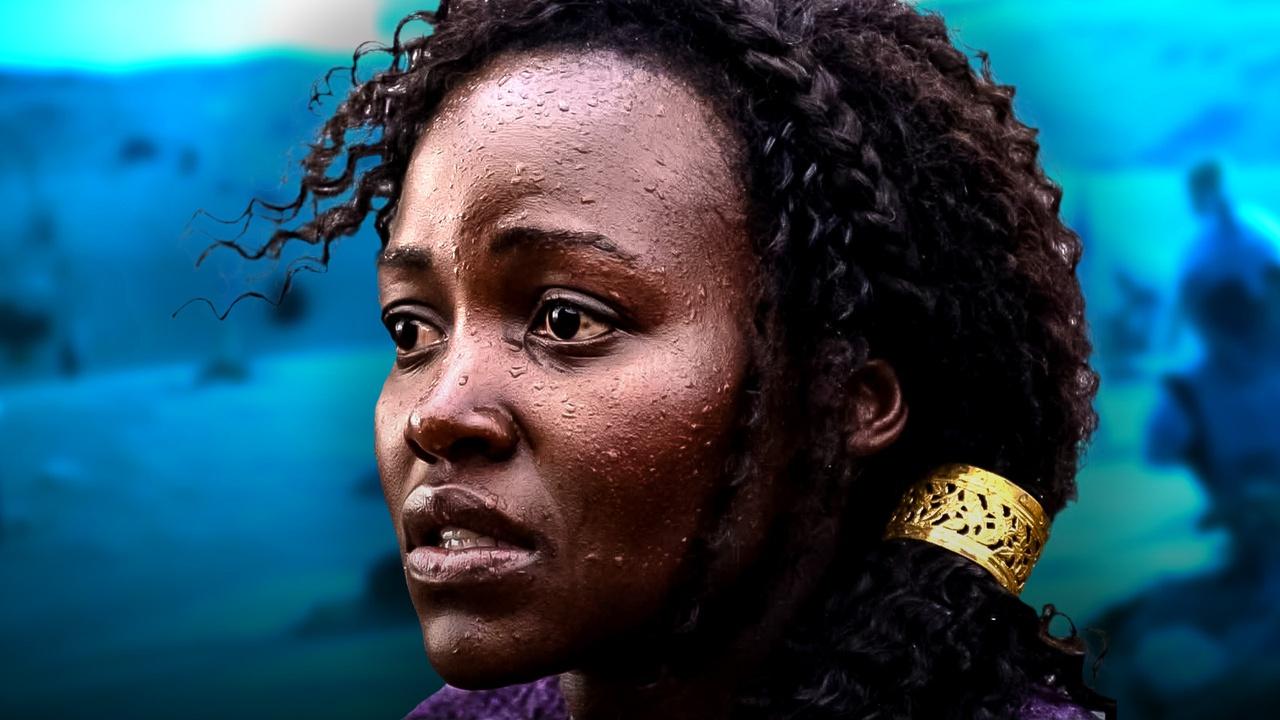
This matches Agamemnon’s armor. In itself, it is a beautiful piece, really stunning. And on Lupita Nyong’o’s sublime complexion, it’s god-like. But it does not really seem to belong to the same visual universe as the rest of the costumes. Yes, she’s daughter to Zeus, but the time she came out of the egg with her sister was quite long ago, I doubt there was a whole wardrobe inside the egg.
Telemachus
Starts as prince of Ithaca, ends like prince of florentine renaissance. Or again, something you could find in an Opera. Very intricate, very ornate final piece. Looks like the piece was borrowed from a Del Toro movie, but passed under a desaturating filter.

Feminism and female representation in Christopher Nolan’s The Odyssey
This one. Oh well. Where to start.
A pattern emerges throughout the female characters: Nolan introduces women with agency, only to redirect their arcs toward Odysseus’ journey.
The English author has been criticized before about his way of writing female characters. He clearly tries to write stronger female characters than in the past, but he inevitably failed, giving them an ancillary role. I am comparing again to Game of Thrones, because that is a very good example of how a man can write great female characters.
In Christopher Nolan’s The Odyssey there is a very visible attempt at taking a feminist position, yet it never goes all the way.
While the main character is stripped of almost all his original meaning to highlight the heroic aspects, here we have strong female characters who are strong just until the moment they bend, to make way to the leading man’s arc.
Circe
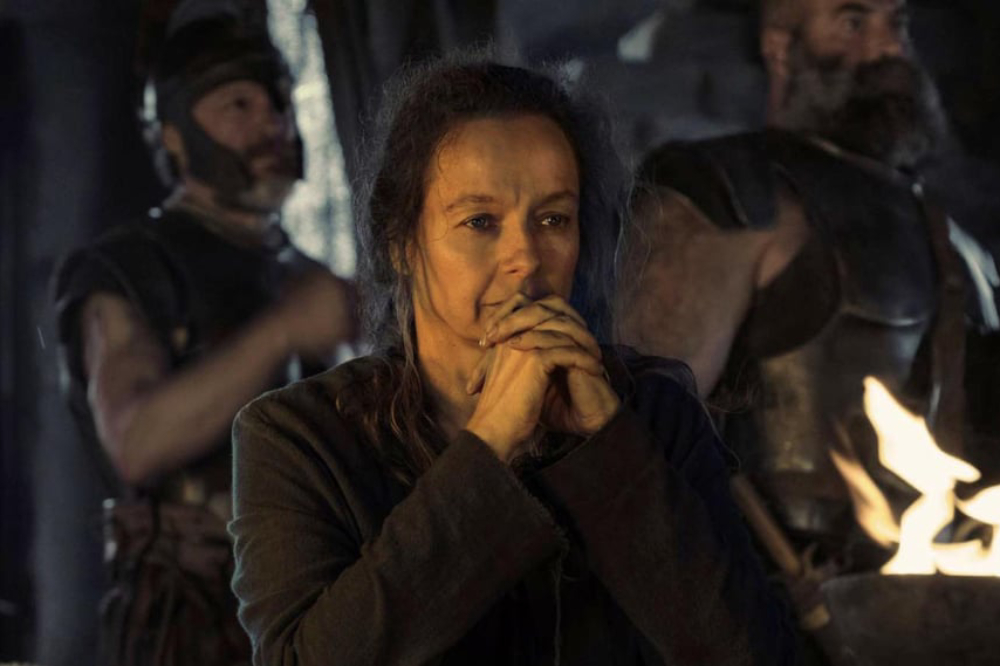
Circe’s sequence in The Odyssey is probably my favourite part of the film.. A real horror piece I feared to have nightmares about. She shows the real nature of Odysseus’s companions by turning them into the pigs they are. She is not majestic, she’s ancestral. She’s a fearful withdrawn woman who’s been abused so much that she has prejudice on everyone coming along. She’s all fear and anger. She embodies not only the fear many women feel of becoming prey, but also the fear experienced by colonised peoples. Which is all great, and meaningful.
Until the moment when she turns the pigs back to men. And yet she suddenly changes her mind simply because Odysseus asks politely. It makes no sense with how the character has been built. If she was charmed by him, that would have made sense, and made the movie even more cynical. But even if we’re past the first half, Nolan does not dare to show his main character as someone who can do wrong things for his own interests. She bends. So you have the fiercest villain of the movie turn to sugar, become the feminine figure that hosts, and serves, and cares, and shares and cooks for the man. No, Christopher, this was not handled very well, if you wanted to show you can write women differently.
At this point I have to say that they mention the topic of sacred hospitality and things that could have made the whole chapter make more sense. But it is the opposite of “show, don’t tell”. See the next section of this review for that.
Calypso
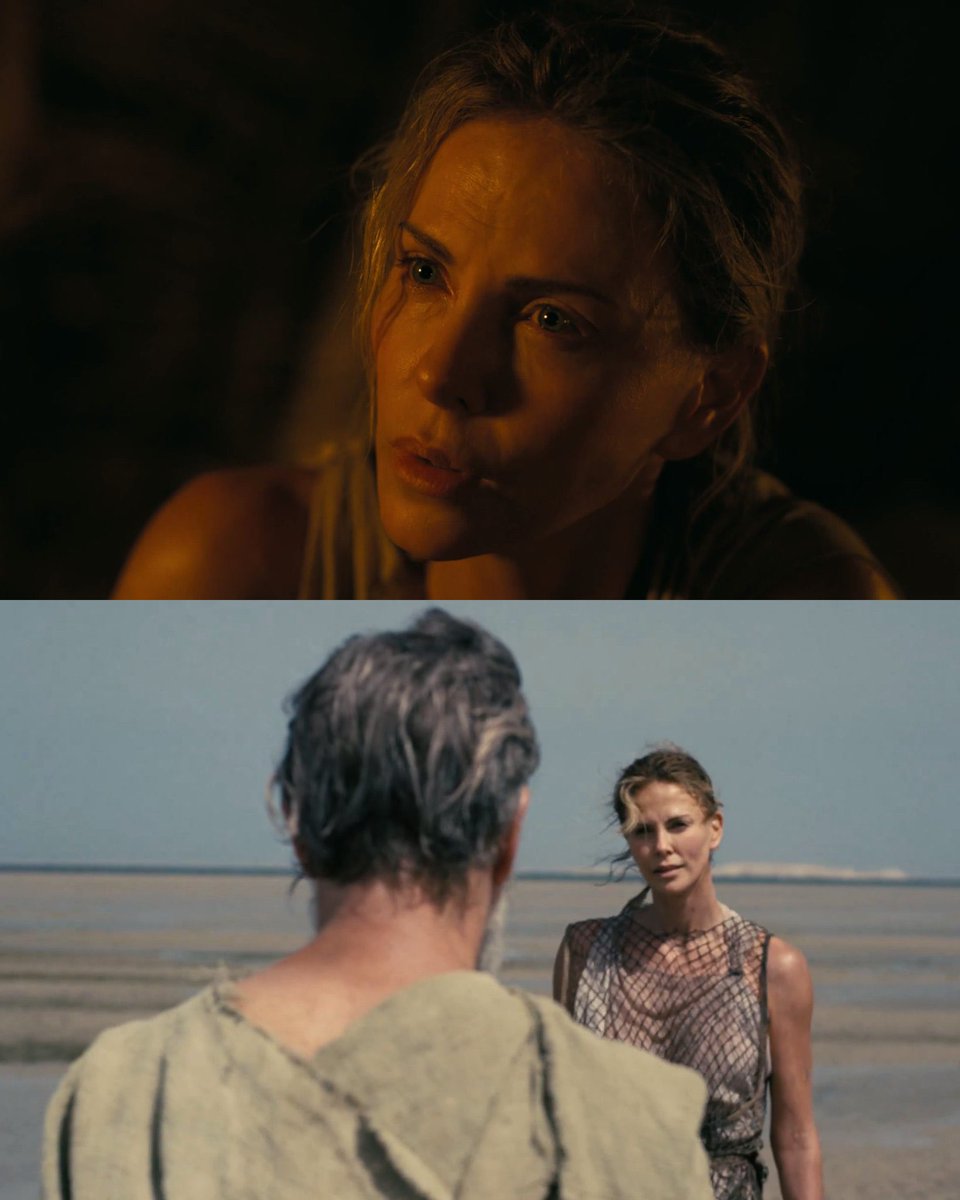
The proof this woman is gorgeous even dressed with a fishing net. But is it enough, when you reduce a bewitching nymph to a psychiatrist who has skipped the class about boundaries? Again, a female character is stripped of her power, even if it was that of charm and seduction (which could have been intellectual as well), to be relegated back to a mere caregiving role. She stops existing for herself, she merely exists to push the man forward, to sacrifice her happiness for him to get back home. I really did not like this rendition.
Helen
Adding her was a choice. Not going all the way through with her, was another.
Throughout her life until Paris, Helen is a trophy wife. Her life with Menelaeus may have not been completely miserable, but the woman was literally won for him, by his brother, like a prize. Because he wanted the prettiest of them all for him, to show everyone he was *add whatever adjective toxic masculinity uses* enough.
When she chooses to follow Paris, she finally takes her fate into her own hands. Imagine a reading in which she was never truly in love with Paris. Where she chooses to use him to escape to a place where women are not kept like caged animals behind a grate, like our poor Penelope. Imagine her broken, when she finds out the trojan prince is not in love with her for her soul, but he once again has won her as a trophy, and has chosen her like a mail-order bride. That is where the character speaks to me, that is what I was interested in seeing, when I knew she was added to the story and that there was a feminist subtext intention. Instead she’s more interested in telling how Clitemnestra has dealt with Agamemnon, and showing her scar.
Once again, a woman standing there just to describe her husband and her brother-in-law.
Please note that at the moment I have written this post, no images of Nyong’o as Helen have been released, so I have used the released one of her as her twin, Clitemnestra.
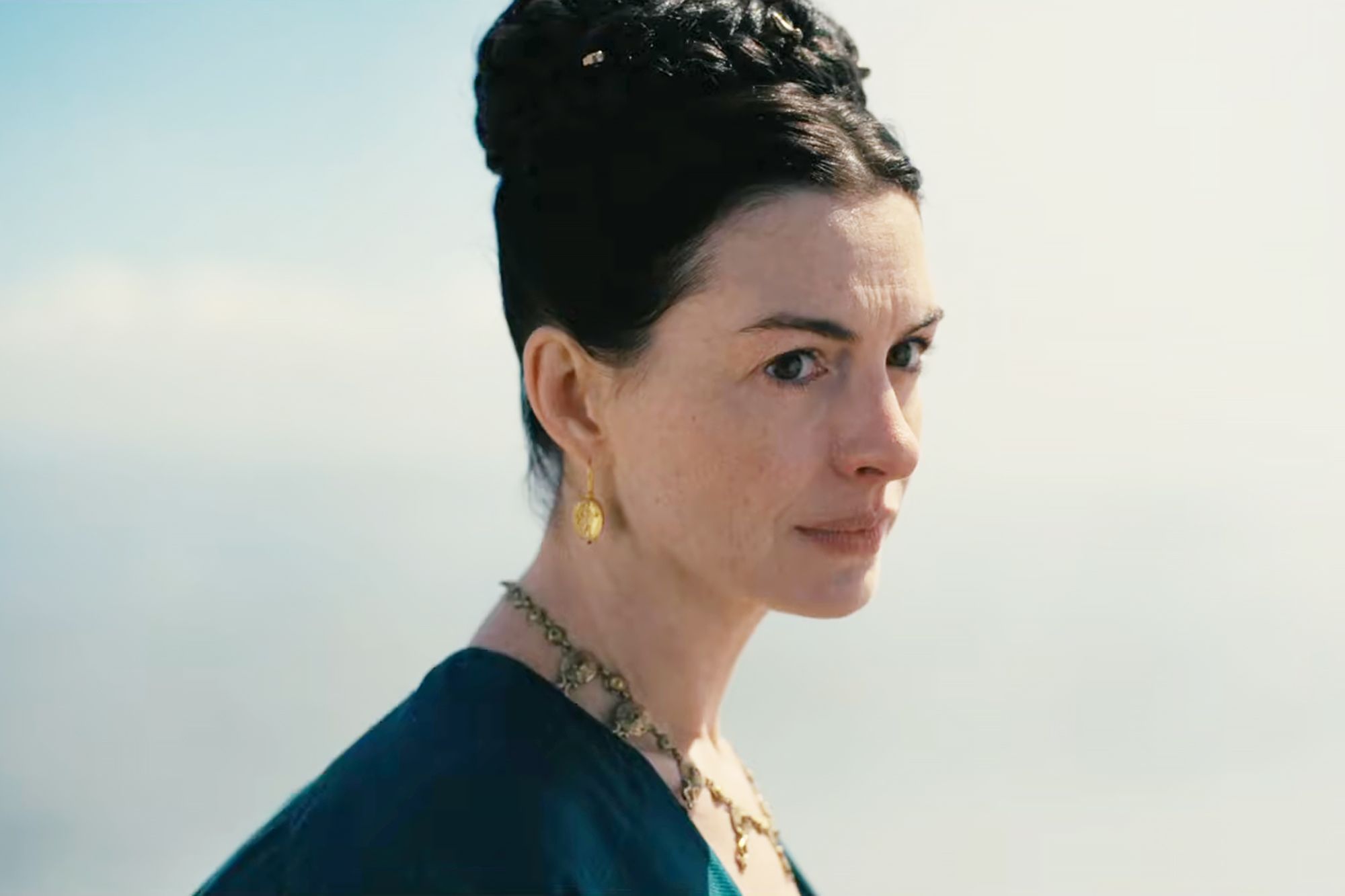
Penelope
Hathaway really acts the part beautifully. But this Penelope is not a queen, she’s the wife of a king. And that’s different. She’s fearful, almost timid. There is strength in her, but when she comes out telling Telemachus that the throne has not been empty because she’s been sitting on it and ruling… well, we never truly see her rule. We’ve seen her separated from the real life, within her apartments, shielded and hidden behind a grate. Alright, that’s because she’s in pain and is trying to avoid the suitors. So this element I could accept, if there was not the next one.
Then Odysseus comes back in disguise. He basically tells her he took so long because he felt too guilty and not deserving the peace of his home and family. If I was her, I would have thought “what the actual…frog”. That was a good time to burst into rage with something like “You have inflicted this punishment not only on yourself, but on your innocent wife, your son, and all of your subjects, you reckless and selfish man! moreover, we’re married. This means you come home and you share these decisions with your wife, before ruining ten more years of her life!”.
Of course, in a more poetic wording. However she does not reply. Again, her strength, her self, her power…immediately fold back into supporting her husband’s narrative instead of hers.
I loved the Princess Leia hairstyles a lot. I just wish her character had more of her spirit.
Show, don’t tell
This is what you’re always told, when studying how to write. Everything, from novels to theatre to movies. Not that everything needs to be that way, but there is a thin line between adding a few elements by words, and a long-winded explanation that is not completely absorbed by the plot and the audience. So, in the end, despite the fact that I share Nolan’s point of view on the world and I understand what he wanted to convey, it was not completely effective. The political speeches are not woven organically enough into the narrative, they feel a bit like afterthoughts. And they are a bit excessive in the amount of words and repetition, especially because they are not consistently supported by what we are shown on screen.
Maybe some more thinking, some more blending, some more… digesting was needed, before adding all this meat on the fire. It came out a bit too raw.
Final thoughts on Christopher Nolan’s The Odyssey
As a costume designer, I found Christopher Nolan’s The Odyssey fascinating because its costume design reveals the film’s central tension: the desire to create a myth for a modern audience while keeping a distance from the colours, textures and complexity of Bronze Age aesthetics. Christopher Nolan’s The Odyssey remains visually glorious. And though it is mostly cold both in colors and feelings, and at times you can feel yourself almost numbed by the continuous negative oppression…you can get emotional and feel how majestic the settings are. And the flame lights.
It is enjoyable. Did it need to be this long? Some scenes, like the final fight, were a bit long and repetitive, and the action sequences have nothing in common with what we’ve seen in The Dark Knight, unfortunately. But others are really soul-filling, even in greiges.
And I have found the soundtrack extremely befitting to the style that was chosen for the whole movie. I am not sure I will listen to it separately, but as far as my limited perception goes, it landed.
Liked this post? Want to know what I think about other movies and series? Email me or comment!
You could also be interested in:


