

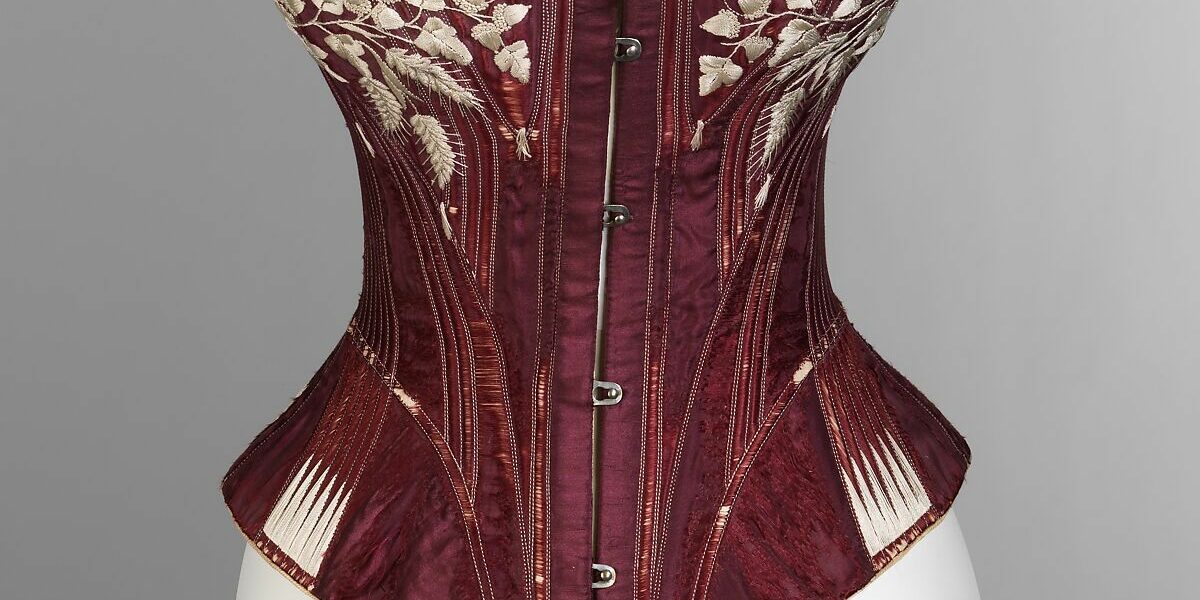
Historical corsetry is surrounded by myths, strong opinions, and surprisingly persistent misinformation. In this article I answer some of the most common questions I have received as a corset maker, costume history nerd, and former physiotherapist, covering construction techniques, materials, health concerns, and the way corsets are represented in popular culture.
This article contains lots of information I have gathered along the years, and I wish it was available to me when I started becoming interested in the topic. To be honest, I started being interested in the topic very young, in my childhood. But the possibility of wearing the things people wore in paintings in museums felt impossible to most people around me, so I dismissed it, until years later. When I found out it is actually possible to have a very close experience and learn a lot from it.
If you are interested in the general corsetry topic, I would suggest you have a look at this article as well!
Construction of the historical corset
What materials were historical corsets made from?
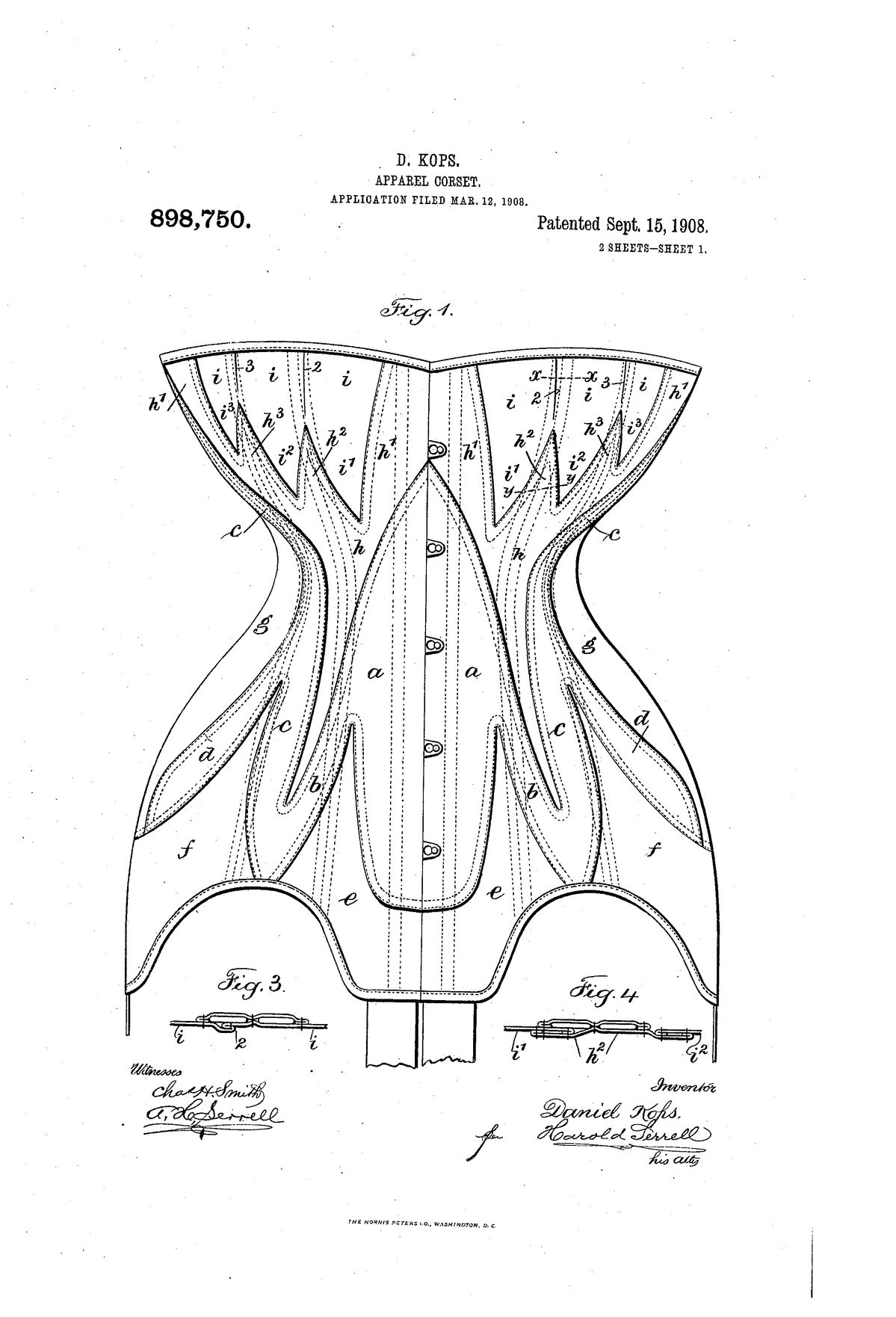
Bodices have been made and stiffened with a huge variety of materials. From leather only pieces, to pasteboard, starched and glued fabrics, straw, cords, paper, whalebone, metal.
If we set aside for the moment all the exceptions, and choose to focus on the century going from 1820 to 1920, we can say that the most common choice for materials was a cotton fabric, on which baleen boning was inserted. Metal grommets and a front metal opening busk complete the set.
There were also corded corsets, corsets with paper rope instead of cording, spring steel boning, applied boning, woven-in boning. Corsets without a front opening, with hand sewn eyelets especially at the beginning, corsets made of stiff fabric, corsets made of ribbons, of aida fabric (breathable starched embroidery cotton mesh), of batiste. There were many clever ideas and different materials. Some are still available to us.
What is coutil and do corsets need it?
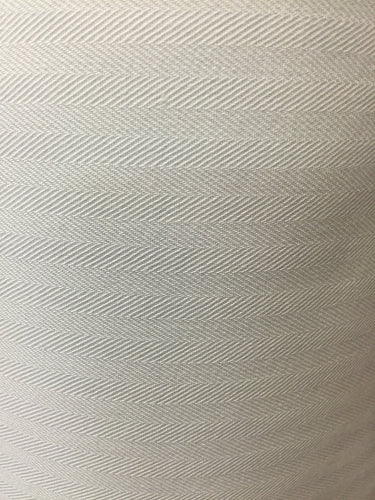
Coutil is the easiest fabric to make corsetry with. It is still produced. It is a starched herringbone weave fabric, with rather tight weaving and narrow herringbone stripes. Usually in cotton. If you wash it, the sizing washes off.
When I started experimenting with corsetry, I was told coutil was the only fabric for corsetry. And though I find it the easiest to work with, because it behaves a bit like thick paper, it is also very hard to find and expensive. Especially after Brexit. Sigh. Most corsetry supplies come from the UK, if you work in Europe, and prices on the continent are set on different averages, especially for sewing supplies and fabrics.
Anyway, you don’t need coutil. You don’t need to back every single corset with it. It helps in achieving an extremely sturdy piece, but it is not something you need to have a good corset.
Corsets not made of coutil were not the exception. Lighter fabrics and fabrics with different weaves were used very often. As long as they were not stretch, and they were symmetrical in their “giving”. Twill and serge weaves have some issues on this matter, but were still used and you can find corset patterns labelled for serge and twill fabrics in period magzines. I would just fear they would twist over time. Other herringbone fabrics can be used, satins, popeline, seeting material, even mesh can be used, canvas… even ribbons. They even had crocheted corsets and leather ones, the variety was really there and coutil ones were just a large slice of a very populated cake.
What is baleen?
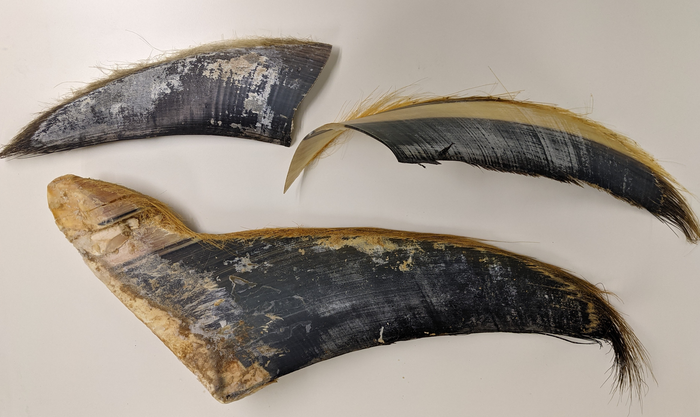
Baleen is often referred-to as “whalebone”. Whales were involved. Bones not so much.
Baleen is the thick “brush-like” teeth whales use to filter water for their food. It is composed of the same thing our hair and fingernails are made of: keratin. There is also a small percentage of the same mineral we have in our bones, but very little. You can imagine, if you have not handled baleen, that it is like your nails.
As Luca Costigliolo* teaches (and I strongly suggest you follow his work and attend his classes,a s he is probably the most knowledgeable person on our planet when it comes to historical corsetry, he usually collaborates with the School of Historical Dress), baleen boning is light and very flexible, and could easily be cut to desired width. It came as a block that could be cut to the exact size and thickness needed. It could be shaped with heat, easily sanded down and pierced with a needle.
Imagine a slightly thicker stripe made of the thing your fingernails are made of. I think we can both agree that the flexibility of cable ties is closer to the feel, than that of flat or spring steel boning.
Moreover, the baleen ages, and becomes less flexible and more brittle. So the corsetry we have nowadays from the time does not necessarily still portray the feel they had back then. Being organic matter, it ages.
*Several things I have written here came from open lessons Luca gave. I consider them as samples. So that knowledge is not mine to give without credit. I share it along with his name and that of the School of Historical Dress, so you know where to go as a primary source, and know there are reliable classes you can purchase.
What is synthetic baleen?
It is a type of plastic that mimics baleen, without having to source the material from whales. It is sold in pre-set widths, and in ribbons, so you get it by the yard. It can be pierced, cut, sanded, heat-formed. Though I generally find myself in need of thinner or narrower stripes than commercially available ones, so I end up combining it with other materials.
It is different from rigilene, and it is different from common plastic boning used in cheap corsetry. It can be as expensive as steel boning. It does not snap. You can shape it both with the heat of your body and a pressing iron (on a tailor’s ham, not on you, of course).
Why were steel bones introduced?
This is a question I was asked, and I hope to be able to reply in the future. If I had to make a guess, after trying both modern synthetic baleen replicas and flat steel boning, I would say that sometimes you want a stronger material, in order to make things faster. You can support an F bra cup with a dozen of flexible bones, or three steel ones. They are not interchangeable, the type of support they give is very different, one supports the shape, the other pushes it into position… but sewing three or twelve boning channels per side, and having to floss them all, can dramatically change the crafting time and price of a piece.
In the end, it is good to have as many options as possible, so you can pick the one that suits a specific project.
Steel Boning vs Baleen: What’s the Difference?
Baleen is lighter, more flexible, can be washed without fear of rusting (you still have the metal eyelets though). It is easier to work the ends of the bones so that they do not poke through the fabric. In my experience, each is useful to certain purposes. I prefer the feel of synthetic baleen corsetry to those boned with metal only.
How were corsets closed before metal busks?
They only laced at the back. Stays and transition pieces have front lacing as well, and there are corsets that have lacing in other areas than the back, such as pregnancy ones. People in most cases could still wear a piece by themselves and take it off, even if it was laced only at the back. It takes some patience and practice, but it’s a five minutes thing, when you’re used to it. No women prisoners of their corsets until the maid came.
I do have some dresses for which I actually need help, like those where my shoulder movements are limited (1660s… I am talking to you). But with historical sleeves, properly cut, unless you are wearing an off-shoulders piece, if you have a long enough cord and a mirror, you can lace yourself in and out.
Can you lace yourself into a corset?
Yes. With a little practice. And a mirror, when starting. If the corset has a busk closure at the front and cord loops at the waistline… it is fairly easy. In my experience it merely takes a couple of minutes at most, when you get the hang of it. But if you want to know the real trick when putting on a corset, this article has the tip you may need.
Technically, the one on the side picture is a pair of stays. Which has spiral lacing and is harder than a corset. Considering I can do that on my own, you can understand how easy in comparisons corsets can be to lace on oneself!
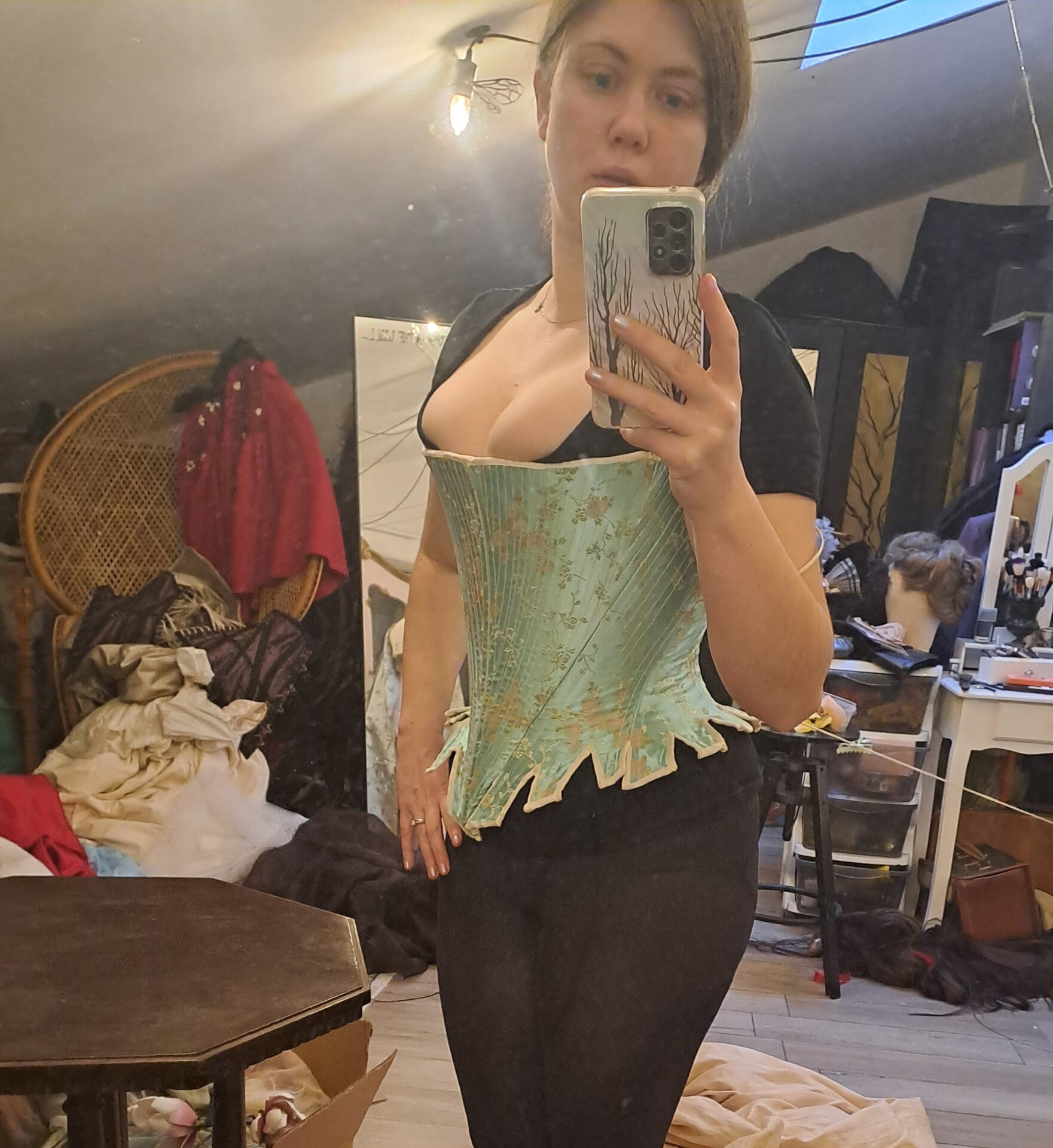
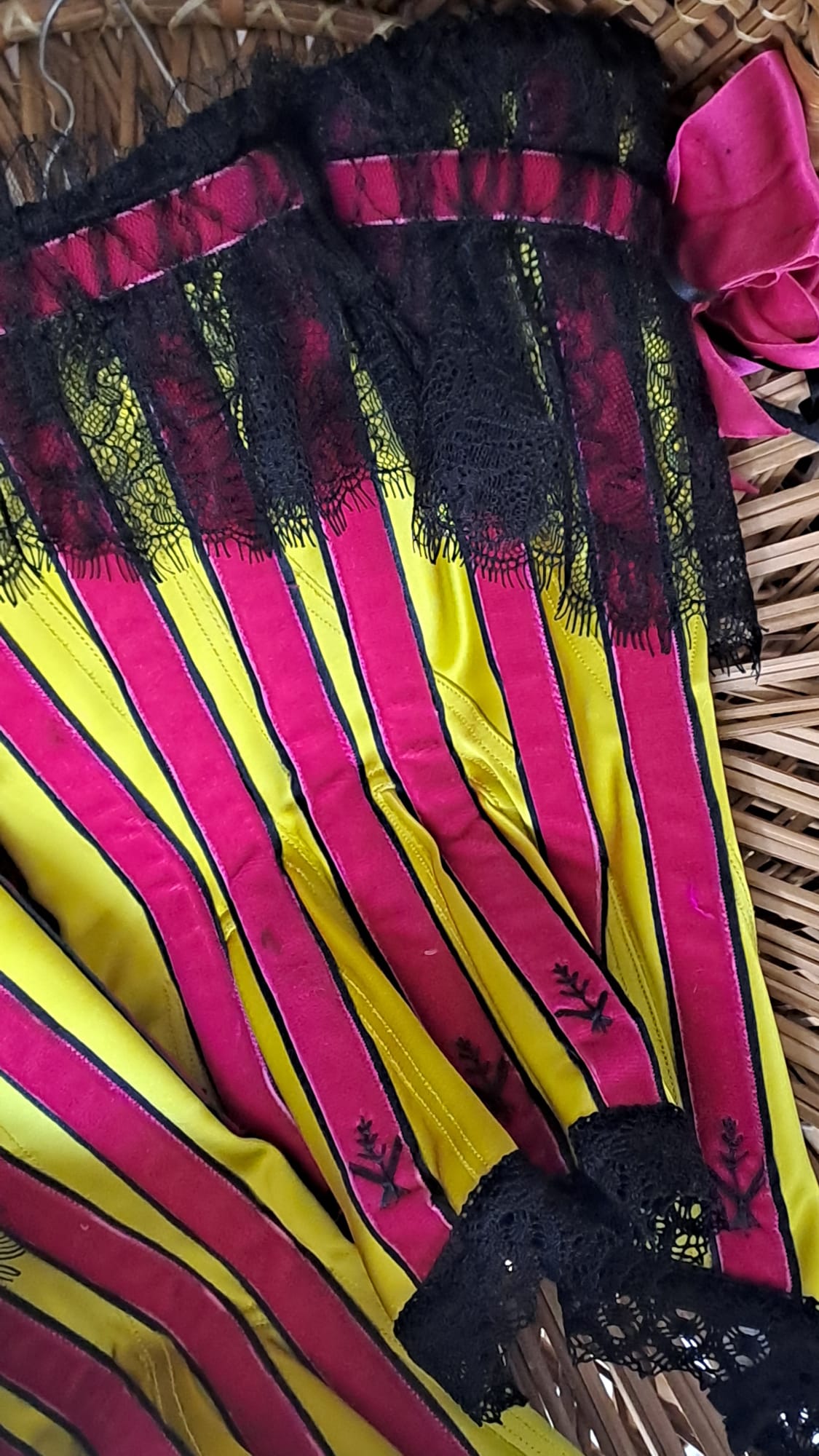
This is a piece I made. Not an antique.
What is flossing? Is it decorative or functional?
Flossing is the embroidery bits you see on corsets. Not any embroidery, the one placed at the end of each bone, to tension it. It is like the pegs on a violin. It is one of the things that prevents the boning from poking through the fabric, while ensuring the corset remains smooth at the waist.
It is usually the most time-consuming part of making an historical corset. Which is why for modern corsetry boning is usually cut to the longest it can be inside the channel, or people just don’t bother. I still “seal” the boning channel on top and bottom of the bone, with the sewing machine… but it’s not the same thing. Even if you pull, you can’t gradually increase the tension and the machine thing does not protect the fabric in the long run.
The way you attach your boning channels and the way you tension your bones makes all the difference. You don’t merely sew them flat on the fabric, that would be doing a carpenter’s job instead of a luthier’s on a cello. Nothing wrong with carpentry, but you’re building a cello. Knowing how to floss and the dynamics of boning on the body sets apart the seamstress from the corsetière.
What colors and patterns did corsets have?
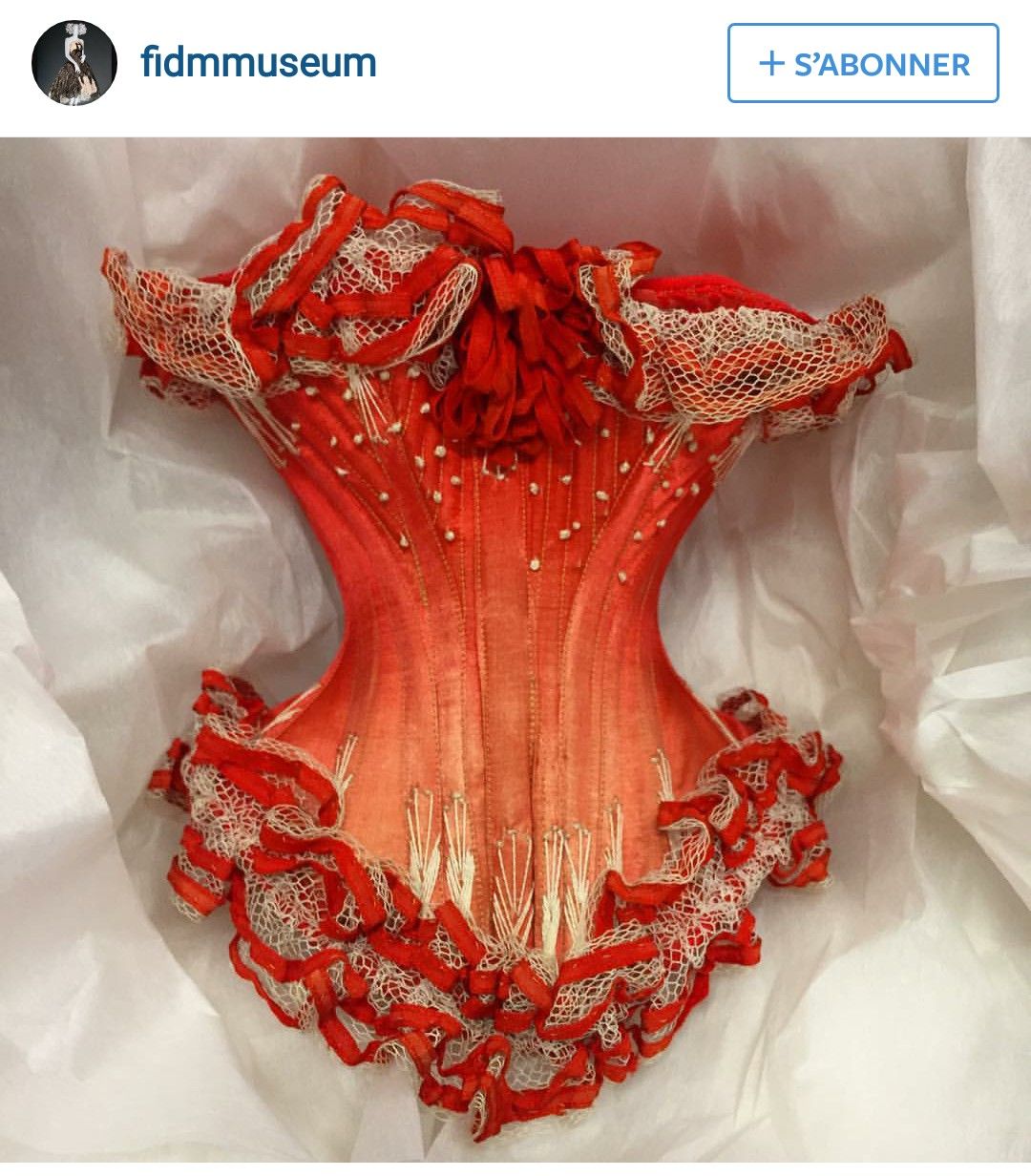
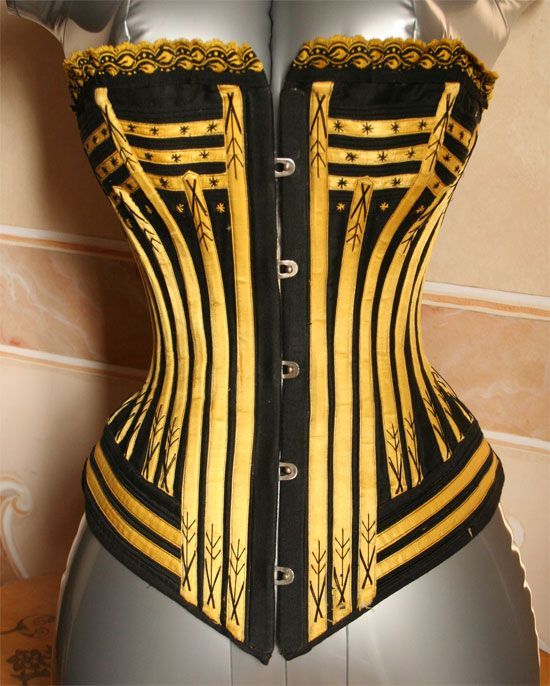
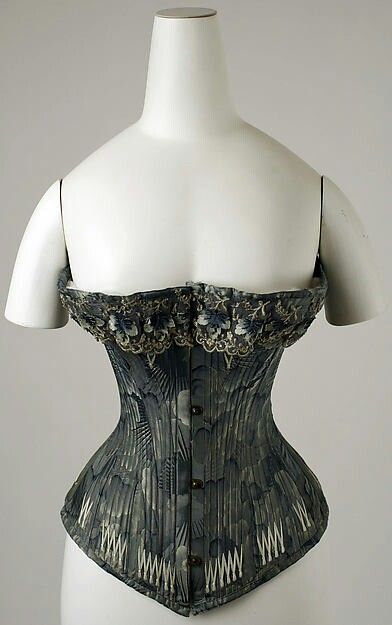
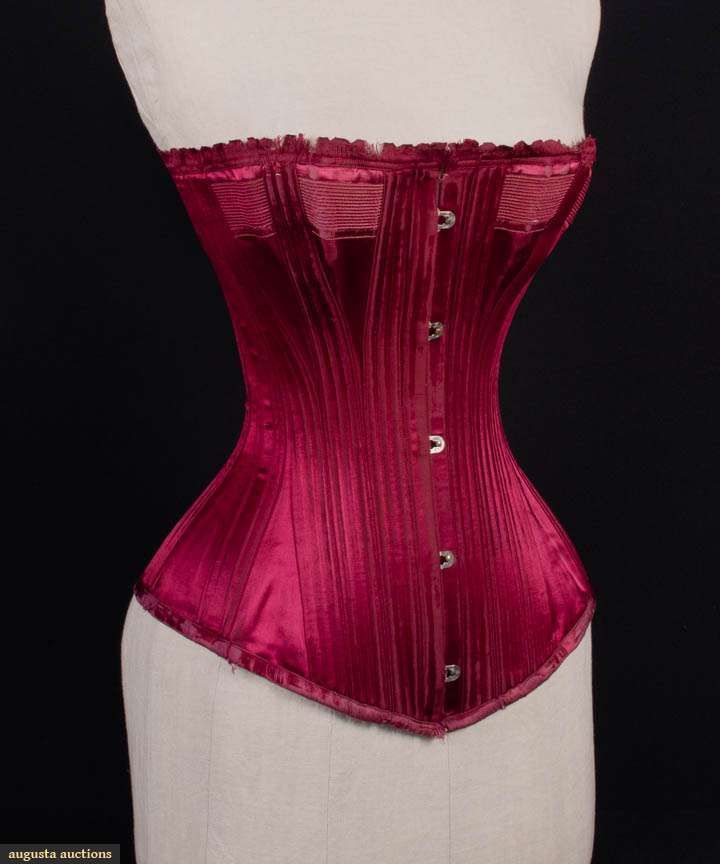
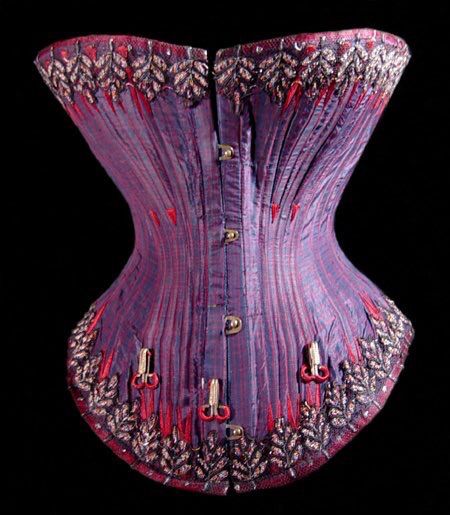
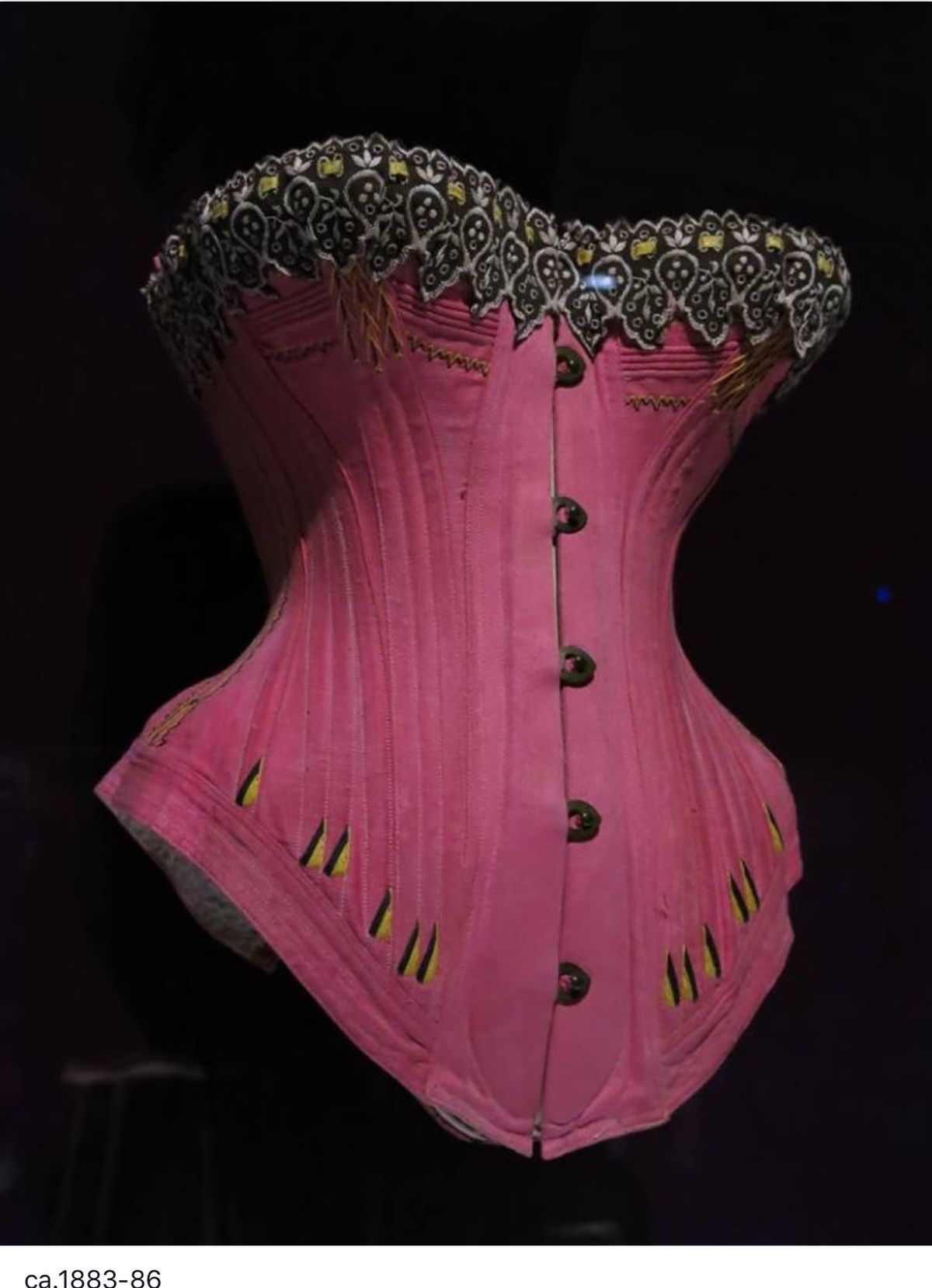
Even though most corsets that have reached us are white and pastel, there are many vividly colored, highly contrasted, daring and fun.
Colors were especially popular in the second half of the 19th century. Before that, light colors were preferred. But even in white and cream and ivory… many many times there are patterns on the fabric. Stripes, dots, roses, geometrical things.
Plain white was cheap and popular, and was mainly used for in-house corsetry. But nowadays, when we tend to think of antique corsetry, we mainly think of that, due to the fact that most corsetry rented for movies is white. But the corsetry world has been more colorful and varied than that.
Corsets and health
Do corsets permanently change the body?
Do they, right now? Only on those who aim for the Guinness world record of the smallest waist. Did they, back then? Yes. They could alter the shape of the ribcage permanently.
But that did require wearing them from an early age, and for all the waking hours, for years and years. And back then lacking nutrients, malnutrition, autoimmune conditions and other things made people back then less healthy and prone to earlier deaths. So we have to clearly separate from the practice of wearing corsets all your life and wearing them for recreational purposes nowadays. And we have to separate tight-lacing from wearing a corset that mostly supports the bust and gives the minimum waist reduction needed to keep the bust supported.
It is a multi-factorial thing, and it deserves to be reported with the complexity the topic has, and not the cliché of those who have never studied the topic seriously or never tried a custom made piece on themselves.
Can corsets damage internal organs?
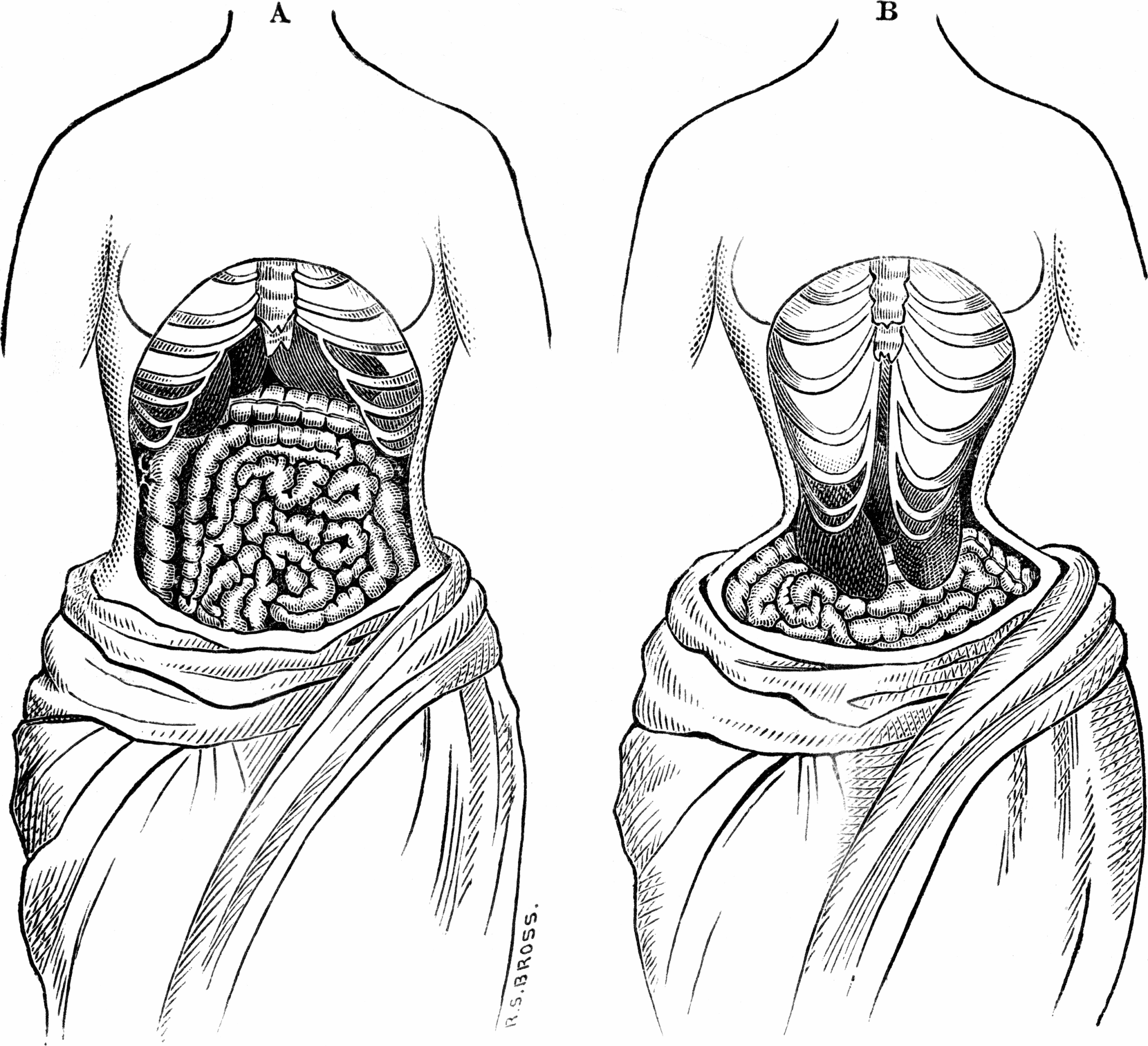
Current evidence suggests that properly fitted corsets worn responsibly do not cause organ damage in healthy individuals.
People get surprised here, they see the medical illustration of victorian times with the organs in natural position and with a corset, and they do frown and worry a lot. But you have to consider that they had no way of knowing exactly what happened inside the human body while wearing a corset!
X-rays were yet to be invented, so it was the educated guesswork of the same people who gave labdanum, cocaine and alcohol to children. Can we please stop considering those people ridiculous at one moment and reliable at the same time? They did mean well, I am sure. But at the same time they were very limited by the tools of the time.
Nowadays we have more reliable medical doctors. And tools. We actually have MRIs of people wearing corsets, showing that nothing worrying happens.
HERE you can see the whole thing.
So, long story short, organs are squishy. They get squished when you wear a tight waist thing, when you get pregnant, when you eat or drink a large volume of things, when you do your physical exercise, when your bladder fills, when you sleep on your tummy, when a doctor does the needed palpation or echo scan to see how the deeper things are. They get back to where they were before the external intervention. And they do so easily.
Did corsets affect pregnancy?
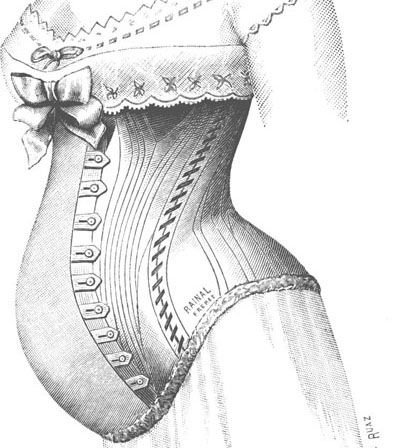
Pregnancy corsets did exist. But they were not supposed to pull the waist in! They were made to support the bust and the belly. They may look gruesome with all the lacing, and they may trigger that sensitivity for fetish aesthetics. But in reality they were made like that to adapt without compressing the abdomen at all. The aim was to take the weight from the back and distribute it to the pelvis. Not unlike garments we use today. But those who have tried pregnancy corsets tend to say they’re way more effective.
So pregnancy corsets were not made to squeeze and deform the foetus.
Did doctors really oppose corsets?
Some of them did. Some believed women needed them because they were not strong enough to stand on their own. Of course this reflected the social beliefs of the time rather than any medical reality. They also said water has memory, and people today still cure themselves with memory of duck liver without any real scientific proof. Current medical evidence is generally more reliable than nineteenth-century speculation, thanks to modern imaging technologies and research methods.
Can corsets improve back pain?
As a former physiotherapist, this is one of the topics on which I feel most strongly.
For some types of back pain, corsets can give some sort of very temporary relief. They should not, however, be used for that purpose. Please see my other article where I discuss the topic and explain while they may make you feel relieved, but worsen things in the long term.
Back pain is a symptom, not a diagnosis. Before considering any supportive garment as a solution or aid, seek a proper medical evaluation from a medical doctor legally qualified to diagnose musculoskeletal disorders. A fashion corset is not a medical device, and neither its maker nor its wearer should assume it can replace appropriate diagnostic assessment.
Orthopedic corsets need to be prescribed by a doctor, with specific indications, and made from specialized people, with a degree in creating prosthetics and medical aids, not someone who deals in fashion. They are VERY different things that ask for very different knowledge. You can harm yourself without knowing.
If you are a corset maker, it is your responsibility to redirect patients that come to you in hope of a solution for their pain to a medical doctor. Not doing so and taking the commission for the money is highly irresponsible and may lead to legal issues.
A corset maker, no matter how experienced, is not a healthcare provider, and a fashion corset is not a medical treatment.
Can corsets improve scoliosis?
You can ask anyone with scoliosis, who has worn a proper orthopedic corset all their teenage years long. It takes a lot to even hope to stop scoliosis from getting worse while growing. The best you can hope for most of the time is that it just stops where it is.
Fashion corsets won’t generally damage people with scoliosis, if there are no other conditions, but they won’t help either.
Generally, passive things have a very hard time altering a living skeleton. However some people with scoliosis need their fashion corsetry adapted to the asymmetry of their spine and ribcage, in order to feel corsetry comfortable. And in some cases scoliosis increases the stiffness of the ribcage, so you may find ample waist reduction to be less comfortable.
Can you sleep in a corset?
It is something one can do. It is not harmful. It is just deeply unnecessary, rather uncomfortable and serves no purpose whatsoever. If you want to do the experiment, go ahead… but people did not sleep in corsets.
Corsets in film and popular culture
Why are movie corsets often inaccurate?
Because actors usually complain a lot when they think they’re going to wear a corset. Truth to be told, very few people in the movie industry can actually make comfortable corsetry. And lots of corsetry is rented and not custom made. And the time for mock-ups is usually not there. You don’t even have the actor until the last fitting, just a mannequin that does not squish. So you don’t have the best process, the best knowledge and the best skill at hand all the time you need to.
The conditions to work well are rarely there.
Is everything shown in movies historically accurate?
It almost never is. Even when directors and costume designers declare in interviews that it is. Every reenactor knows you can’t replicate things to perfection even when you spend a lifetime doing that.
You have occasional moments of bliss when you see a single believable thing in a sea of things created to give the average idea and feed the fantasy of the average viewer. But that’s ok, movies are not documentaries.
Most documentaries don’t show proper replicas ever. But that’s a different topic. Movies are made to entertain, not to educate.
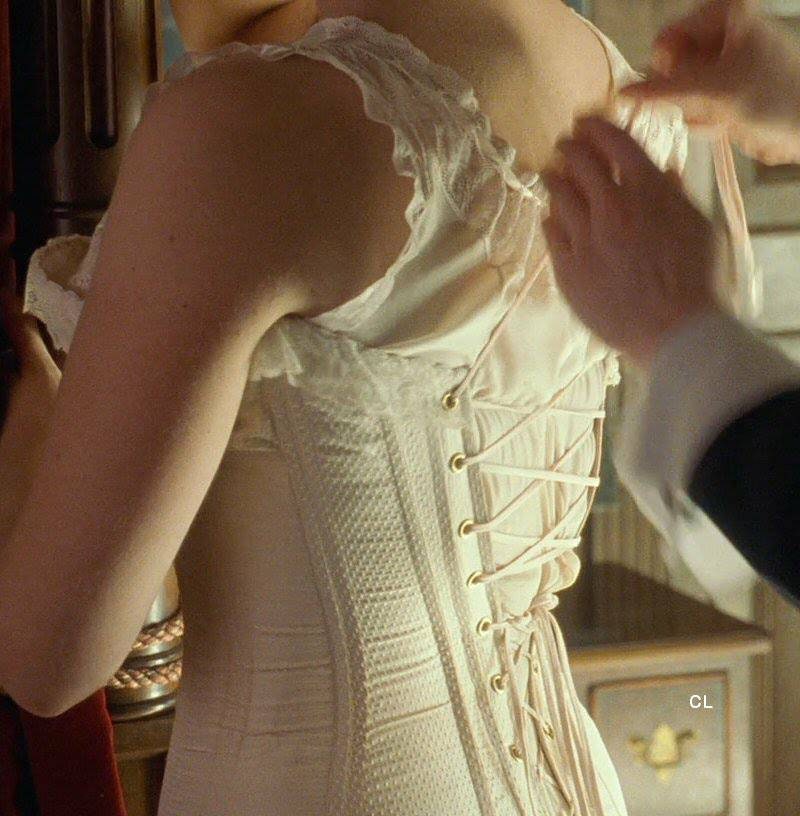
We know, Rose, that’s not how you lace a 1910s corset, you poor thing. At least it has dots.
Which movies portray historical corsets accurately?
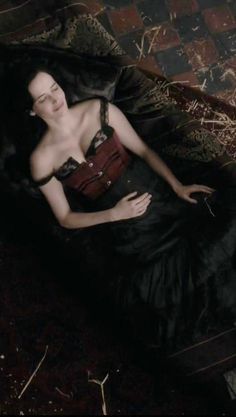
If you see a corset that is not plain a white, you’re usually in the right direction. I love Penny Dreadful, Sweeney Todd. And anything Tosi did.
Why do actresses often wear the wrong corset for the period?
I answered a few questions above. But here I would also like to mention that sometimes directors have very specific requests that are more storytelling-based than accuracy-driven.
For example, chemises (the undergarments worn at all times underneath the corset, which would never touch the skin) are often taken away for scenes that are supposed to be perceived as sexy by the masses. Many directors think that an undergarment like that would make the scene look almost puritan, to the average person in the wide audience they hope the movie will have. So chemises are never worn, and that average guy thinks they did wear dirty things because the corset was worn against the skin. And stuff like that.
I think there are several chemises that are made of laces and ribbons and even bloomers made of almost sheer materials that are extremely sexy. But they take a lot of fine stuff to make, and a lot of time. And you need to know they existed, to show the picture of the antique piece and convince the director it would be sexy even for nowadays standards.
Are fantasy corsets based on real historical garments?
Some. Fantasy movies can do whatever they like, in the end. They tend to draw inspiration from stays and corsets to give the old-timey and princessy feel.
They’re fun to watch! I just wish we’d see more well-cut ones. As the pandemic of badly cut corsetry is thriving in fantasy movies as well.
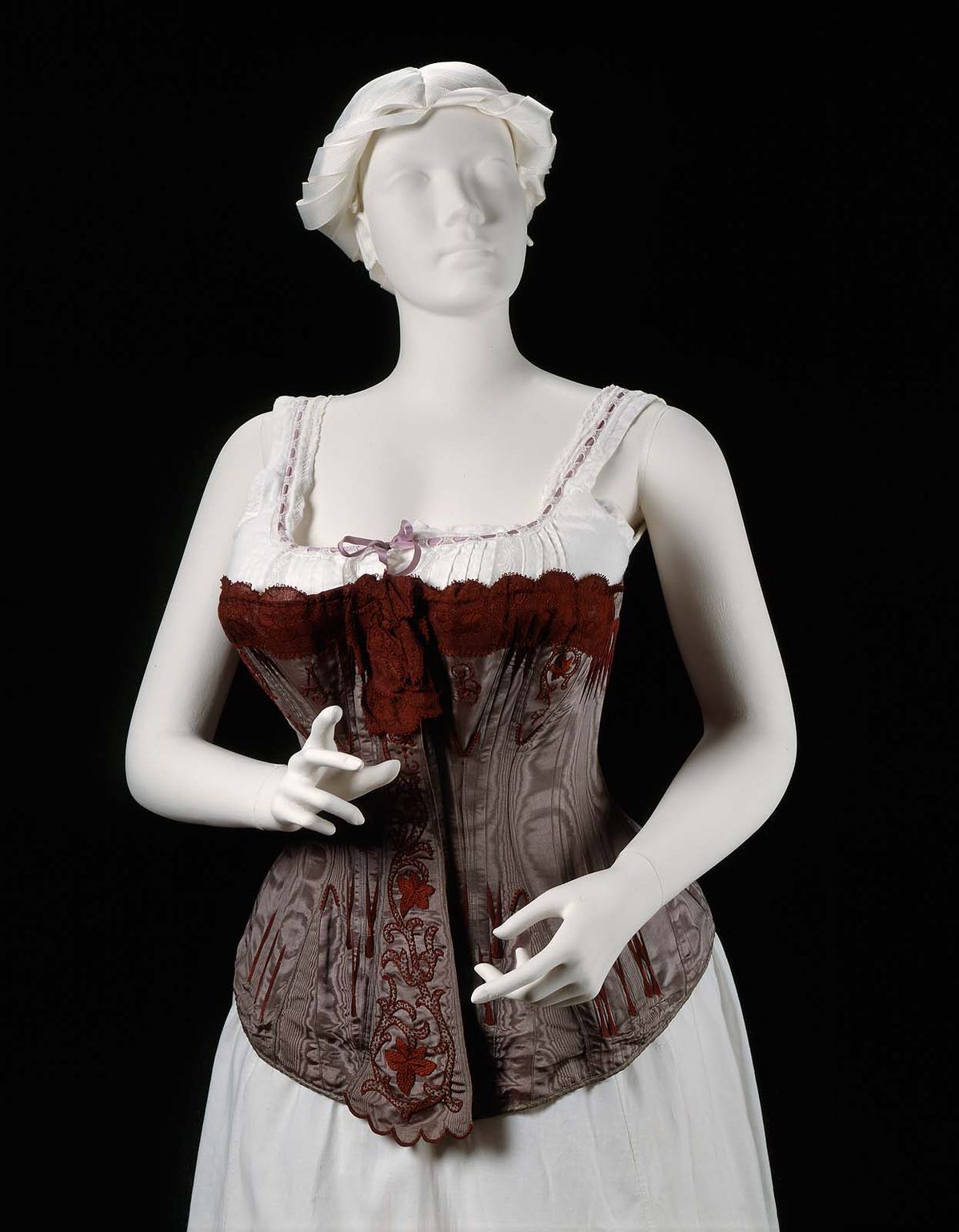
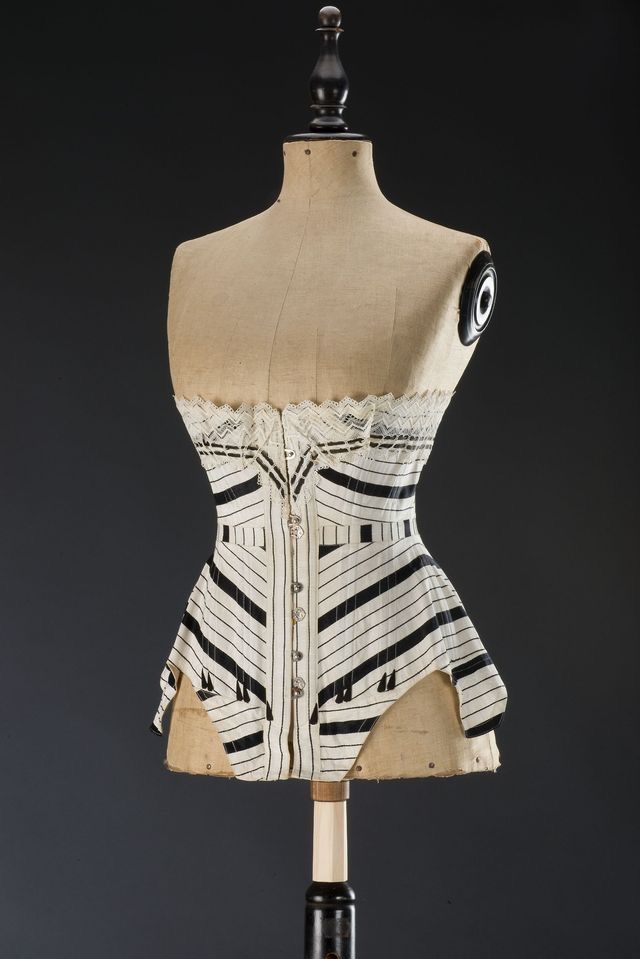
just tobe extra clear, the two ones on the sides of this paragraph are originals.
Now you want a corset. I know.
I may be able to help:
And if you’re here just to read, you’re welcome to do so! Maybe leave a comment or share this with a friend, if you’ve found it interesting!






Excellent breakdown! I especially liked the section comparing steel boning and baleen—it clears up a lot of common misconceptions. Historical corsetry is such a fascinating topic, and this article explains it in a very easy-to-understand way. Thanks for sharing such detailed information!