Or better still, what I wanted to know when I started being interested in corsets. And what I wish someone had explained to me earlier. Part 1. There will be more. But it is such a wide topic for me, that I need to split it in more articles and review it every once in a while.
Before we begin, a small note from me.
Corsetry is a subject that inevitably touches on body image, beauty standards, gender expression, and the sometimes complicated relationship we have with our own bodies. Because of that, I would like to make my position clear.
I believe that all bodies are worthy of respect, care, and celebration exactly as they are. A small waist is not a requirement for beauty, confidence, historical costuming, or self-worth. Throughout this article, when I discuss waist reduction, silhouette, or proportions, I am speaking about the technical and historical aspects of dressmaking and body shaping, not about ideals that anyone should feel pressured to pursue.
Historical clothing was created within societies that often imposed restrictive expectations regarding appearance, gender, and social status. Exploring those garments does not mean endorsing those expectations. On the contrary, I believe that understanding them helps us better understand both the past and ourselves.
I have also made a conscious effort to use gender-neutral language whenever possible. When terms such as “women” or “men” appear, it is generally because I am discussing historical sources, period advertisements, or social conventions that were themselves gendered. People of every gender, including non-binary, gender-fluid, and transgender individuals, are warmly welcome here.
My goal is for this space to be one where historical curiosity, craftsmanship, self-expression, and body acceptance can coexist. Whether you wear corsets for historical accuracy, artistic expression, comfort, performance, gender affirmation, or simple enjoyment, I hope you will find information here that is useful, respectful, and empowering.
If you feel I have overlooked something or could express an idea more thoughtfully, I am always willing to learn.
What Is a Corset?
What is a corset?
A corset is a garment that is able to shape and support the body. It is usually made of fabric, but can be made of other materials. It is usually structured with several different materials and techniques, in order to maintain its shape even when tensioned. It is closed with a system that allows it to adjust to the measurements of the wearer: lacing and buckles are both options.
If a garment is entirely soft, if it does not provide active shaping to the body by decreasing the waist circumference, if it has a fixed closure that does not allow you to wear it loose and tighten it to hug your body, then it is not a corset.
What is the difference between a corset, stays and a bodice?
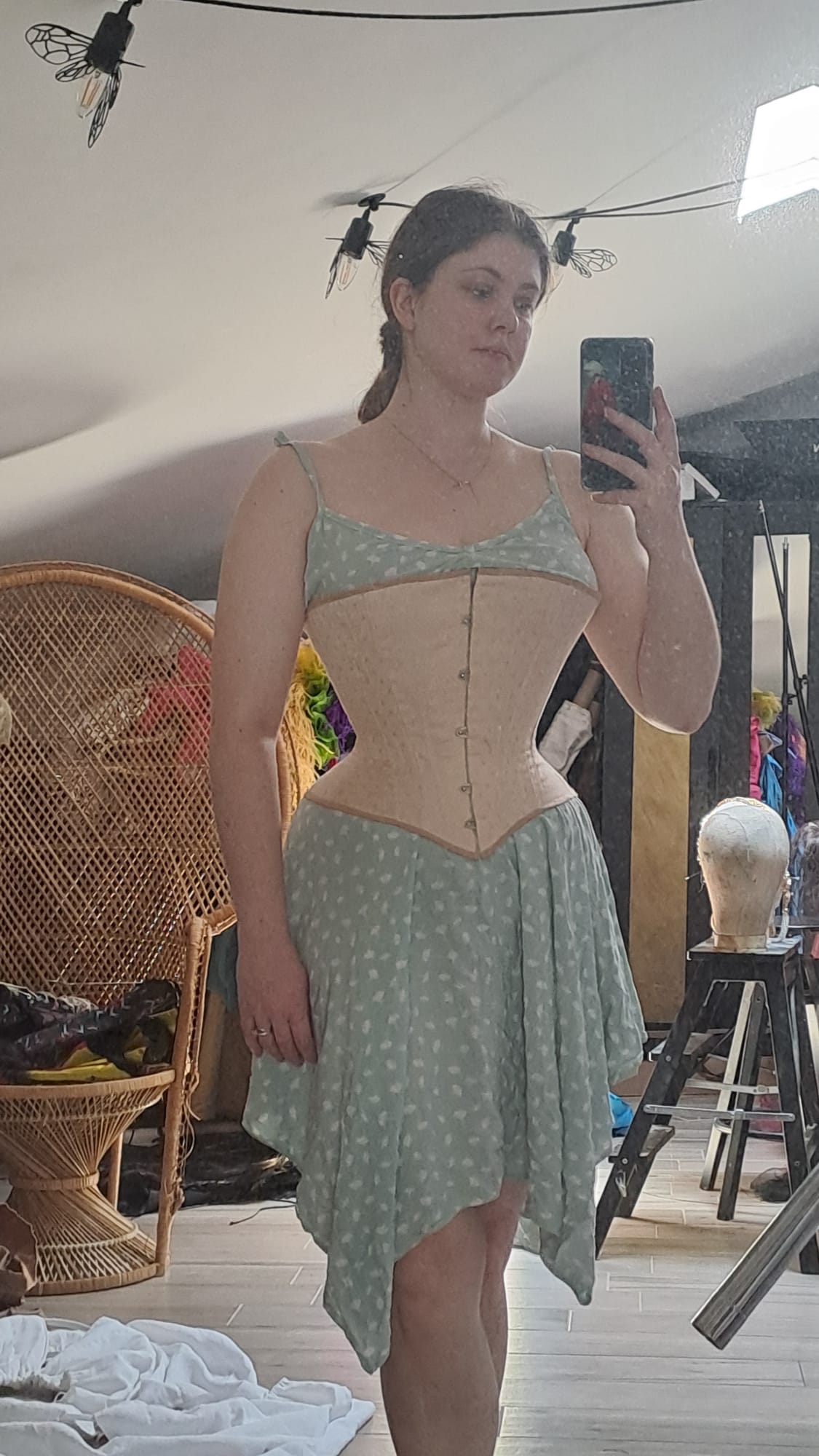
Long story short? Corsets are hourglasses, stays are conical. Stays do not usually have busks that open at the front, and the bottom section is split in several “tongues” or skirts to accommodate the width of the hips. Corsets usually have a continuous bottom hip line instead. And are far easier to finish with bias tape. Corsets usually have metal eyelets, stays never have them. Stays are before 1800, corsets are what follows.
Why were corsets worn?
To both shape and support the body. Dramatic shapes were not the average, but most women found bust support to be a comfortable thing. And anchoring it to the waist makes it more comfortable than anchoring it to the shoulders. This is why many people with larger busts still find corsetry more comfortable than bras today.
Very short history of the corset
When did corsets first appear?
It depends on the definition of corsets. Corsets and boned bodices existed way back to the renaissance. Though what we call stays comes into place when the 17th century boned bodice becomes an undergarment under mantuas, in the end of the century, and what we call proper corsetry with the smaller waist starts coming into place in the 1830s.
Did all women wear corsets?
Historical sources usually discuss corsetry as a women’s garment, although people of different genders have worn body-shaping garments throughout history for a variety of reasons.
Especially in the 1890s and 1900s, people with small busts did not need to wear corsets at all times. However, when you see a crinoline, or panniers, they do need an undergarment to distribute the waist. And if your figure is generous, shaping it into the historical silhouette (even with little to no waist reduction this can be done!) can help you achieve the period look. So, if you want the result, and to work on the costume above with a huge support in all aspects, I suggest working on your historical wardrobe with corsetry as a foundation layer never to be skipped.
Did men wear corsets?
Historical sources often distinguish between men’s and women’s corsets, although body-shaping garments have been worn by people of different gender identities throughout history.
Especially in the 19th and early 20th century, people identifying as cisgender men did wear corsets. Both fashion ones to create the right shape under garments, both as support when doing heavy lifting.
How did corsets change from the Renaissance to the Victorian era? Why does the ideal silhouette change over time?
Proportions and shapes greatly change. But overall… before Jane Austen we had cones. After Jane Austen we have hourglasses. During Jane Austen we have confusion. I will not dwell in untangling that just now. It would need a proper article. As much as you need proper bust support for a believable regency outfit and can not skip it.
On why it changes… it depends always on fashion, economics, historical events, desire to emulate and to be perceived as different from something else.
How do corsets work?
How does a corset shape the body?
Corsets shape the body by squeezing soft parts of our body into other positions than where they naturally sit. They do not make volume disappear, they distribute it differently.
By tightening some areas, you push that soft tissue elsewhere. You take away from one area to add to another. Like working with clay. Or like grasping onto a water-filled balloon.
Good corsets should create pressure only on the waist. And little on the floating (meaning mobile!!!!) ribs, in some cases. Bones are added to the corset to prevent them from gathering at the waist, not keep your body still like an armor.
Does a corset reduce the waist?
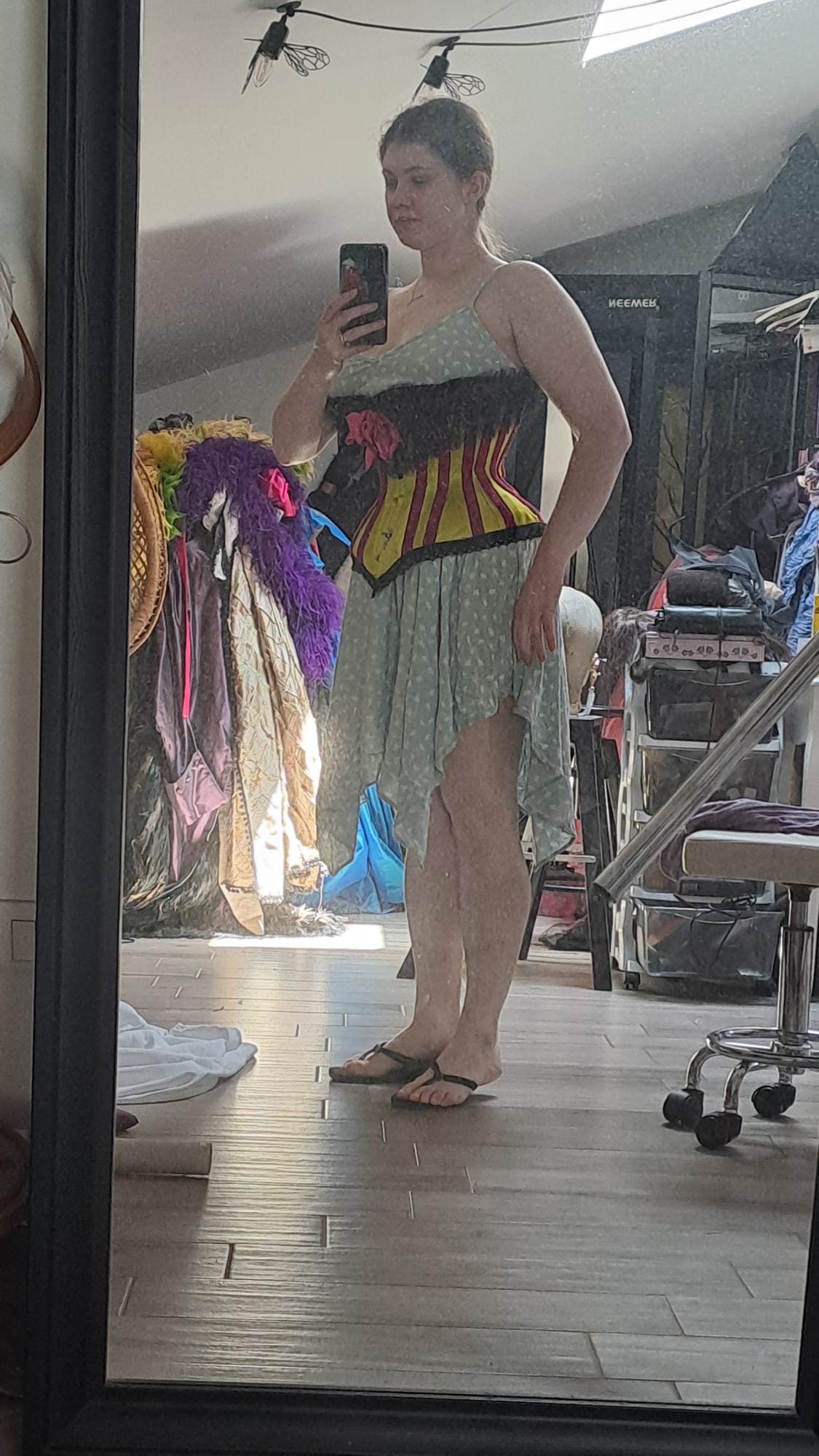
Good corsets reduce the waist. They need to. But not in the way you think. And not permanently.
You can have a perfectly perfect corset that only reduces your waist by 4cm (one inch and a half). A little bit of a hug is needed, corsets, to work, can not have the same measurement you have when without. This is because they redistribute the volume, and because they need that little pressure to anchor and support the bust properly, especially if a large cup size needs support. If you don’t do that minimum, the corset may be pushed around by the weight of the breast, and would defeat the support purpose.
That said, corsets anchor themselves on the waist, which is a very peculiar area of the human body. At the waist, you do not have the flexible structure of the ribcage closing all around, or the stiff structure of the pelvis. You have organs. Organs are like… well… jelly. We all have some degree of abdominal fat, which behaves like jelly. No matter your size… the inside of your abdomen is jelly. You poke it, you squeeze it, and it gets back to its shape. Like a bag full of water. It does so when a person is pregnant… things there are made to move. When your meal passes through the stomach and intestine all volumes get messed up, things move and squeeze… it has been proved through MRI that nothing bad happens, if a corset only creates pressure at the waist and floating ribs.
Strong abdominal muscles can oppose the shape of the corset, not allowing all the tissue to move as freely as it would, with an average muscle tone. This is why very fit people, with more muscle than body fat than average may find it hard or uncomfortable to reduce the waist.
Scoliosis also reduces the flexibility of the floating ribs, and may make it harder, in some cases, to achieve certain shapes. But I have seen cases where this does not happen, and it depends on the degree of scoliosis.
Does a corset change posture?
It does. It leaves you very less room for slouching. But… to change posture for real you need to train your muscles. A corset does not do that. Every effect it may have, just disappears as soon as you take it off. Unless you wear it non-stop for more than 20 days and avoid doing any sport in the meantime. Which is not healthy, nor recommended, and was not back in the days either.
So no, a corset won’t keep you from slouching. I have seen tired people slouching in corsets. Which is perfectly fine. And a corset won’t fix your posture. Only doing enough sport to keep your muscles in good health will.
How tight should a corset be?
How much you want and how much you can withstand in comfort. If you want to go to your maximum for a special evening, like we do with high heels sometimes nowadays, or as they did back then… you’re welcome to do so.
If you wish to just give a bit of help and shaping, but to enjoy the utmost comfort, that is ok as well. But… when you are having a custom corset made and as you will see how the body adjusts to the feeling (and how sometimes you feel you’re not even wearing one, if it’s well made and with low-reduction), you may discover that your comfort level and aesthetic preferences change with experience. Some people enjoy a more dramatic silhouette, while others prefer minimal shaping. Neither approach is more correct than the other. Not because small waists are something one should aim for on a daily basis, but because the more volume you move to certain areas, the more dramatic the result will be.
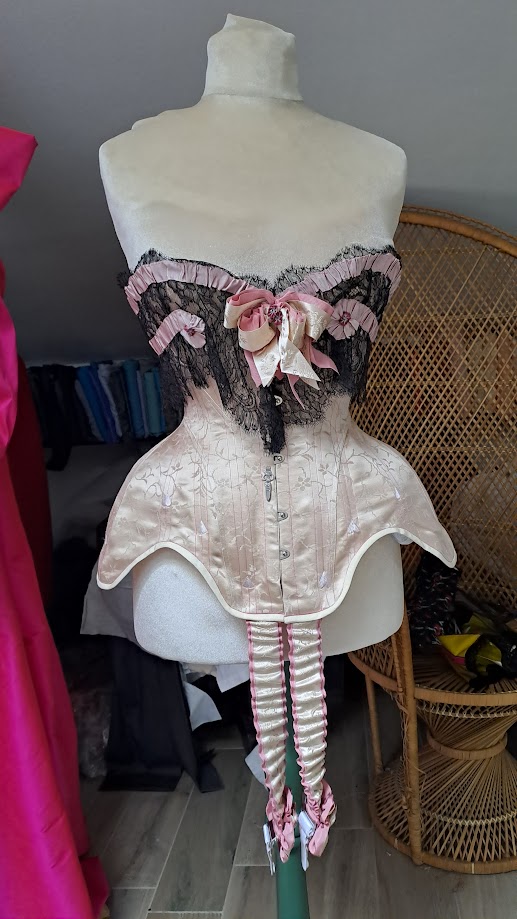
Also, back then they had several types of corsets. From corsets with minimum waist reduction for working people, like the Pretty Housemaid Corset, to super light dressing corsets in batiste, which allowed to be worn with your dressing gown or peignoir, to receive your family while writing letters in the morning, comfortably feeling your bust supported.
Even back then tight-lacers were few. And they were frowned-upon! For example, Sisi (empress Elisabeth of Austria) used to wear very tight corsets, because she felt that the little power she had in her world came from her belonging to a certain excessive beauty standard. Her experience reflects the pressures that beauty standards can place on people, rather than something I would encourage anyone to emulate. But it was both praised and frowned-upon. In a letter between her mother and her mother in law (which was her mother’s sister) they wondered if she felt depressed exactly because of her habit of wearing corsets that tight. Despite the wrong assumption here, we can clearly understand that wearing corsets that tight was not something that was forced upon her directly by protocol or habit.
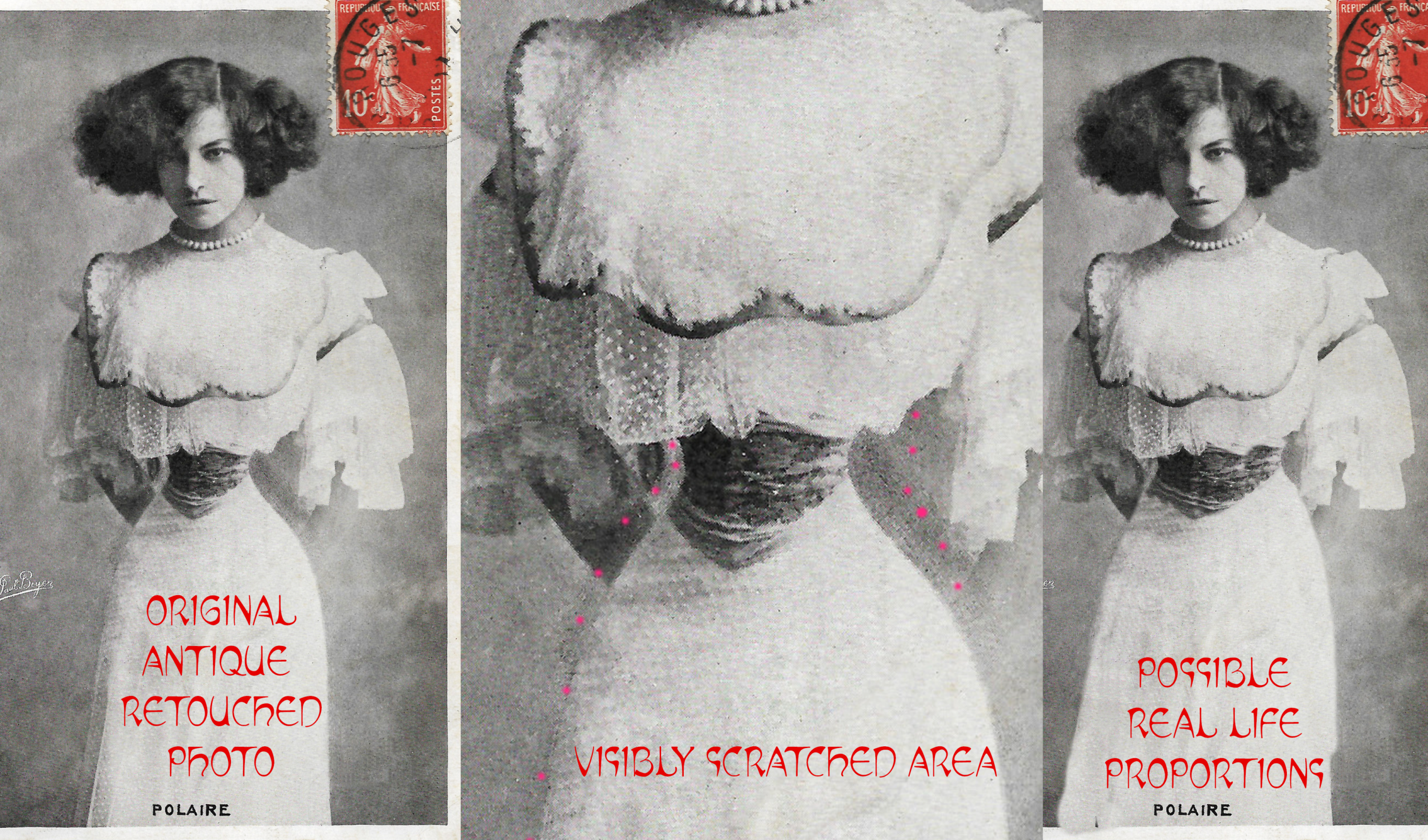
Moreover, historical photos were often scratched and painted over to make the waist smaller and make wrinkles disappear. They had manuals on those, which are still available to us, with the instructions.When you know where to look, everything has a different flavor. They even painted jewels on portrait photos. And lace. Expensive things that were not affordable to the sitter. Just to say that filters and photoshop did not exist, but the pressure on women to adhere to a certain beauty standard was always there.
Where do I stand on this? Well… I am a feminist. But I also love historical accuracy. And I think exploring these aspects and trying on your skin certain unharmful practices may actually help to identify the roots of the problems our society still has from the myths.
Telling Coco Chanel was a feminist just because you want a woman to be the one who has taken the corset away and not Paul Poiret… won’t make her a feminist. In the same way blaming it all on the corset won’t make it the dreadful thing someone thinks it is.
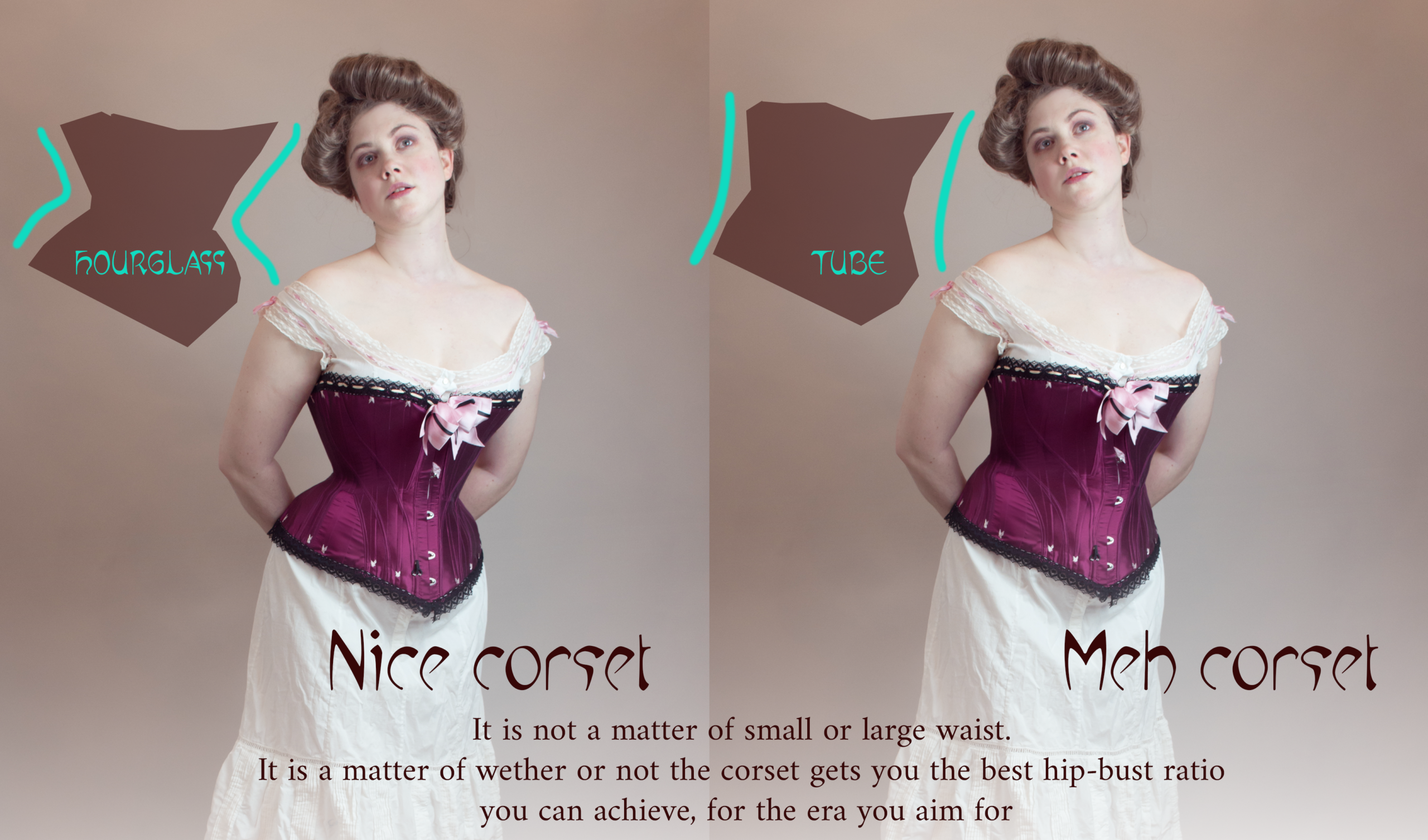
So, how tight should your corset be? It should not be uncomfortable. But it should be well cut. If you wear a cheap tube and can’t cinch more because the piece does not give room to the hips of the chest… it’s a waste, and it’s useless to suffer like that. If with a well cut corset you achieve your limit, that is perfectly fine. And the difference really shows, believe me. Proper corset give you the right proportions even without that suffering.
What if I am not comfortable with significant waist reduction?
There are people who can get to a very tiny waist the first time ever they wear a corset. I have a friend who is like that. She has a naturally very flexible ribcage, without any discomfort or anything. She wears with comfort and ease corsets that I can not tighten that much on myself.
I have also had customers with very sensible ribs, or ribs flaring out by natural shape. Or people with less flexibility in general. They tend to feel more discomfort in tight corsets. But that does not mean they can not enjoy wearing corsetry or being shaped into a silhouette that makes achieving a believable period look easier!
Corsets shape even with small waist reduction. The waist section (when cut, like in an MRI) is usually oval. Flat to the front and back. Corsets, by putting even that minimum pressure, do what pressure does on fluids: it distributes and you end up with a round section. Meaning that, without discomfort, from the front you will look narrower at the waist even with that minimum reduction, and it will be just enough to create a nice historical silhouette. From the side, your waist will be deeper than it was.
Minimum waist reduction can also work well. It is up to you to set where you want to place, between aiming for historical proportions and comfort, if even custom made corsets do not feel comfortable.
Have you ever experienced discomfort with corsetry?
Yes. A lot. Especially when testing on my own pieces.
I have also experienced issues when putting dramatically shaped corsetry on people with low flexibility and sensitive ribs. In some of these cases, the gown was fitted on someone else, and I put the piece on them for the photoshoot. In two of these cases, over almost fifteen years, I had to undress the model. One of them had already worn my corsets without issues, but was not feeling well the day of the shooting. I regret pulling a bit tighter than I should have. That was not an ideal situation and it was a learning moment for me.
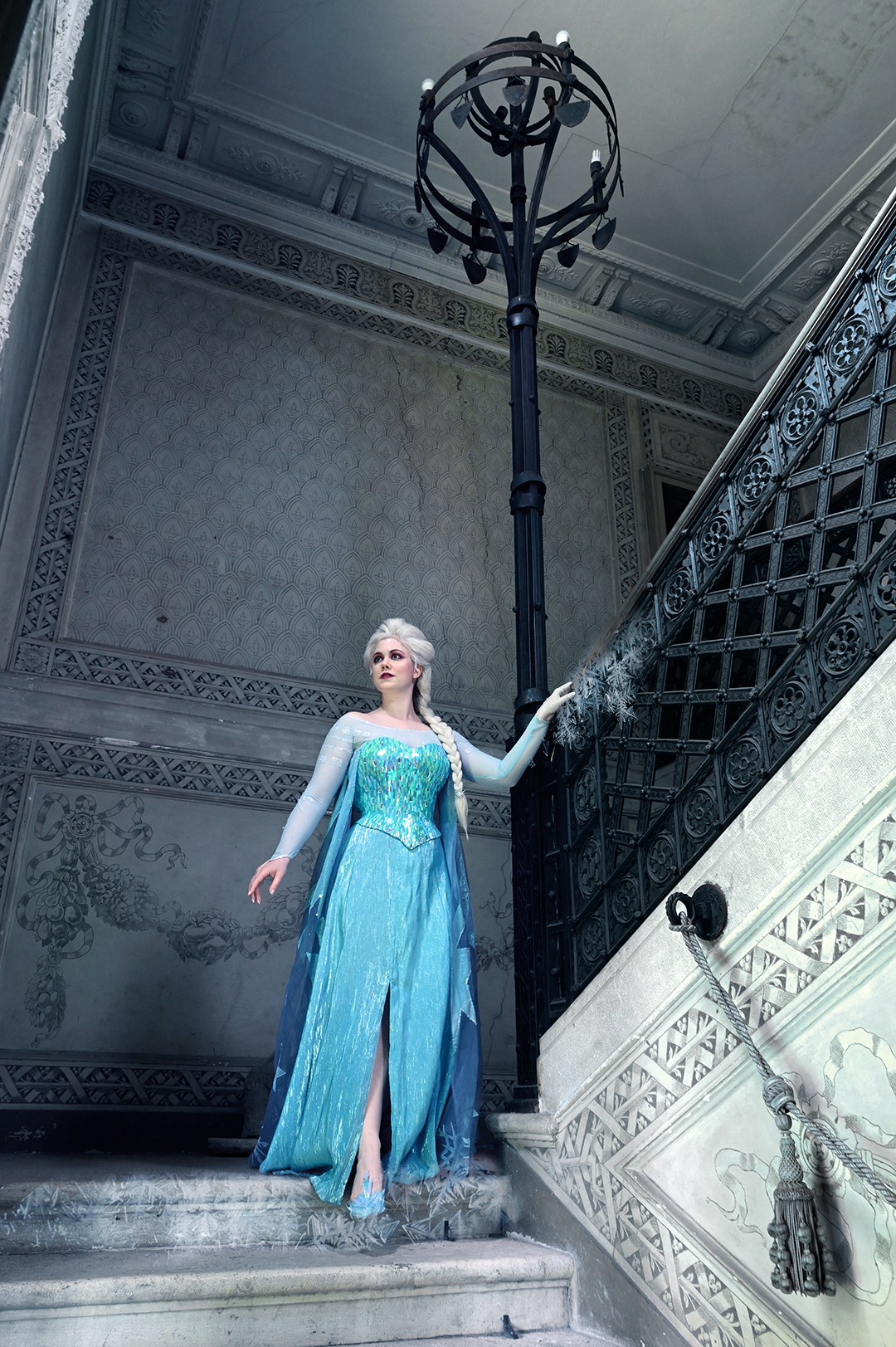
I have also experienced discomfort with my own pieces, when wearing my 1880s red dress. The 1875 corset I have is probably the most comfortable in my personal wardrobe. However the weight of the bustle and petticoat are quite a lot. I skipped using silk and went for an affordable high end synthetic satin that is rather heavy, and needed more fabric to be flatlined with. While in 18th century dresses and 1850s crinolines you have evenly distributed weight, with bustles you only have the weight pulling at the back. That was uncomfortable to wear for a whole evening. But I don’t blame the corset I have worn successfully on so many other occasions (it is the one under my Elsa costume!), I blame not making the skirt in a lighter and historically accurate fabric.
I also had bruises from one of my corsets. I was at the beginning and I wanted to test how small I could make my waist. I added very hard boning right on the ribs. That was foolish, but I did learn a lot. Now I have no marks for that. While I do have scars of that time my bra underwire casing broke while I was sleeping. Not nice.
Most common corset myths
Were corsets torture devices?
Hollywood has largely profited on this for over a century. Actresses complaining about alleged broken ribs and pain to get to the role that made their career is something that has happened since the dawn of film. And before. In the golden age of movies women were praised for their small waists, and the focus started to go there. And the fetish for corsetry, started as something mothers used to wear, then grannies… then fetish environment… you blend it all together and you get a perfect stigma cocktail.
Don’t get me wrong badly made corsets or excessive ones, cut to work against the body instead of for it… have always existed. The more the corset became a thing in the past, the more knowledge got buried under the sand of urban myths and legends. But evidence tells a different story.
After all, Sophia Loren has always worn beautifully crafted corsetry just mentioning the thing, not pretending to faint every movie she made.
Did women really faint because of corsets?
If we take Hollywood aside, there’s little evidence of women really fainting. At least not exclusively because of corsets. Fainting is reported more as a way to get someone’s attention.
Moreover, even if at the time they pointed at the corset… there were so many health-related things they did not consider, before blaming the corset: from undiagnosed endometriosis, to malnourishment, dehydration, poisoning from harmful chemicals in the environment… you name it. Even in wealthy houses you could get sick because they considered some necessary things like fruits and vegetables to be “lesser foods”, because they were what common people based their diets on.
And let’s not forget that women were very good when it came to adhering to the image of the fragile angel that was all the rage back then. They fainted at bad news, but they surprisingly could dance the night off in the tightest corsets, galops and polkas one after the other, rhythms and choreographies that leave people out of breath even when not wearing one. They could ride and jump on horses for hours and hours in the barbaric style of fox hunt (hunting is barbaric, this is even more so) that implied chasing the animal across the countryside until it was tired to death. And these are the high society ladies. Scullery maids and washerwomen? Cooks and mothers of ten…
Did corsets deform the ribs?
To this answer, as a former physiotherapist, I can reply with detail.
Do you have any idea of how hard it is, by wearing braces, orthopedic corsets, or other contraptions… to shape a bone that is not in an ideal shape or position? I know teeth aren’t bones, but they are inserted into the jaw bone. You don’t just give it a push. People with scoliosis or bad teeth can assure you: you need to be relentless. And sometimes wearing hard shells for years does merely stop the alteration given by growth, it does not reverse it into the standard position.
It is not that easy to shape your skeleton at whim. And it is extremely hard to do that by mistake. To do so, you usually have to start young, when your bones are not yet fully grown, and you have to literally grow into the shape, like a tree you want to curve the trunk of.
Skeletons with deformed ribs do exist. But it is not something you achieve by wearing corsetry at 30 for a couple of days a month. Not even by wearing a tubular corset from Amazon for a week or two when you are 15. And even with tight lacing… you’d need months. And you take corsets off by night. Consider pregnancy: you keep that volume on, day and night for months. It changes the position of your organs, the way your ribs work. And then you usually get back to normal in a few months (when it comes to abdominal organs and ribs, we’ll leave the pelvic floor to a different discussion).
And then there is the function. We don’t care if the ribs are deformed, the question is if in the new position (which is not that far off from the original one) the person could get enough air in to do heavy-duty jobs. People can do heavy duty jobs with half of their lungs made unworkable due to cigarette smoke. If you sum that up with a deformed ribcage, you can have issues. But that deformation alone is not enough to reduce the breathing function as much as needed to even lightly compromise the quality of life. And yes, it’s easier to get deformed bones if you live in a poisoned environment, with specific types of undiagnosed illnesses and lacking nutrients. So, again, please give the full context and don’t just say “it was the corset”. It was everything that contributed to that.
And don’t get me started on how nonsensical it is to believe that in a world without proper anaesthesia and antibiotics people would risk their lives to get a rib removed for fashion.
Were Victorian women laced into impossibly small waists?
Some of them? Yes. All of them? No. Were they forced to go that small? No. Above you have some of the reasons. We also have several antique corsets that are actually in very reasonable proportions. And if people stop wearing antique corsetry of larger sizes as fancy dresses, leaving only the small ones to posterity… we may actually leave some proof of this to the next generation.
Were the waists that small? Sometimes. Was it the goal, so some women did a lot to achieve that? Yes. Were they all forced into torture devices by their husbands and maids? Let me ask you: are you forced to wear heels, makeup, to do botox? Some women may be. But most of times we do that because we choose we want to match a certain image society deems more suitable. Is it an issue? Yes. But you can play against the game from within, if you see it.
Wearing corsetry
Can a corset be comfortable?
Yes. Are they all comfortable? No. Bad corsets can be uncomfortable and a corset that is not cut for you can be uncomfortable. I had bruises from badly made commercial corsets.
When a corset tries to squeeze outside the sweet and soft area of the waist, you do have circulation issues, bruises, even skin peeling and skin color alteration that does not go away within 24h. That’s the main point. On the ribs, the corset should gently hug. On the hips, it should just envelop and touch. The bust should be gently supported. But that is soft, so you can really shape in different ways without many issues.
This is why custom made corsetry is such a game changer. Also, the mock-up other makers and I offer do make sure we take into care the uniqueness of your skeleton’s shape. Two persons with the same measurements can have dramatically different corset, depending on the flexibility of their abdominal muscles and ribs.
Also, people with curvier figure usually find it more comfortable to wear corsetry. Body fat can behave like padding, and increase the amount of volume you can move around (not push to make disappear! Move! Play with! Enjoy it!) to achieve very dramatic silhouettes without discomfort and without the need to decrease measurements to mythological numbers. As drag queens teach, it is not a matter of size, but of proportion!
Comfort varies greatly from person to person and depends on many factors, including body composition, rib flexibility, muscle tone, and individual sensitivity.
Can you sit while wearing a corset?
If properly made. Corsets can be longer than your seating line, especially in 1910s styles. But boning should never prevent sitting.
Also, the way the waist is placed on you can really change how comfortable the pressure is, while sitting.
Some people endure pressure better than others. Knowing how you work, how flexible you are… makes everything easier.
Can you dance while wearing a corset?
Yes. And do the cartwheel, and do pushups, and rope jump. And ride a bike. If the corset is the right one for you. Which happens more often when it is custom made, after at least one mock-up.
Can you work while wearing a corset?
Yes. But here I have to say a couple of things. People sometimes wear corsetry all day because they think it is good for their back. And, as a physiotherapist, I want to bash my head against a wall when I hear that. Please see the back pain section.
Can I wear corsetry for my back pain?
First of all: I am prone to back pain. Even with a ballet background. So I speak from both the perspective of a healthcare professional and a patient.
As human beings, we are not made to be still the whole day. Even less so to stay on a chair. Day after day, after day. Though relaxing for your legs, it is not really a good thing for your back health. Maybe you don’t even do your physical activity of moderate to high intensity the recommended minimum of three hours per week.
That makes your back structures work less well, and you start experiencing pain. There are many reasons for back pain, but this is the most common.
Corsets may ease the back pain when you wear them, but the back pain gets back as soon as you take them off for more than one day or two. Because they don’t fix the issue, they mainly cover it, taking some weight off from your back and onto your hips. But, especially if you don’t pair them with proper physical activity that improves your back muscles tone… wearing a corset on a daily basis for many hours can decrease your muscles even more, causing you even more back pain when you stay without.
Most back pain disappears when you walk one hour a day. Or when you go to the gym three times a week. Cycling and things for your legs only do not count. It is typical of back pain to be a nightmare for two weeks, and then to get away for six months, just to come back worse. If after two weeks you think corsetry cured you just because you don’t feel the pain even without one… it’s not the corset. It would have done that without it.
There are also certain types of issues that may cause back pain that need checking. Some do not improve with corsets (osteoporosis being one of them). So the place for your back pain is a doctor’s clinic. Not a chiropractor or an osteopath with no solid scientific evidence behind their work. A proper medical doctor. And then the physiotherapist.
If you are a person with a generous bust and feel a corset is more comfortable than a bra, by all means… wear one. Make sure it is custom made, with low waist reduction, if you plan to wear it daily. But make sure you do more than those three hours a week of medium and intense back muscle training.
How long does it take to get used to wearing one?
It depends on the person. Some just go in. Others need to get used to it.
But there is what I call the “fifteen minutes effect”. If you wear a corset, more or less after that time the body sets and the feeling changes completely. So what is usually recommended is to wear a corset just tight enough to feel hugged for that time, then tighten it until you like and feel good with. After another fifteen minutes you may be able to pull even more. I almost never do this second round, especially if I plan to have a meal, as I enjoy being more comfortable around the table.
Does a corset reduce the waist permanently?
No. Not if you wear it properly. If you are going for a world Guinness record and wear it day and night for years, it probably will. But at that time you’re a shrimp: unable to live without your carapace. It is not something I would recommend.
If you wear a corset in a healthy way, you enjoy wearing it for a day or two, and then get back to your shape.
Waist training is a debatable procedure that promotes such practices. But… but. You start seeing the measurement decreasing after three weeks of daily wear for at least eight hours. That is usually the time of reduced activity muscles need before they start decreasing their volume. My educated guess is that to decrease it is not the fat, but the spine muscles that keep you away from back pain when in health. You want them healthy, you don’t want to sell your health away for a few centimeters less.
Does a corset reduce the appetite?
Not to me. To some people it does. But the hunger comes back when you take it off.
Corsets should never be used as a weight-loss tool or as a method of controlling food intake.
There is one thing though, I will say, as someone who eats fast: it forces you to go at a slower pace. You’re an hourglass: everything works, but at a slower pace. When I eat or drink at my usual speed, I end up… burping a lot. But I like to get quite a dramatic difference from my natural waist.
And last, but surely not least, if you are interested in having a corset made by myself, I offer two options, both including fitting of a mock-up:
The Cosplay Corset, or the good work with the smallest price, also in nude color.
and
The Historical Corset, for those who like to pamper themselves.
And, if you wish to know more about historical costuming, nuntil I write the article about historical corsets in detail… here is your read!